
How a German midwife built a postpartum doula practice in Australia
Interview with Damaris Lee
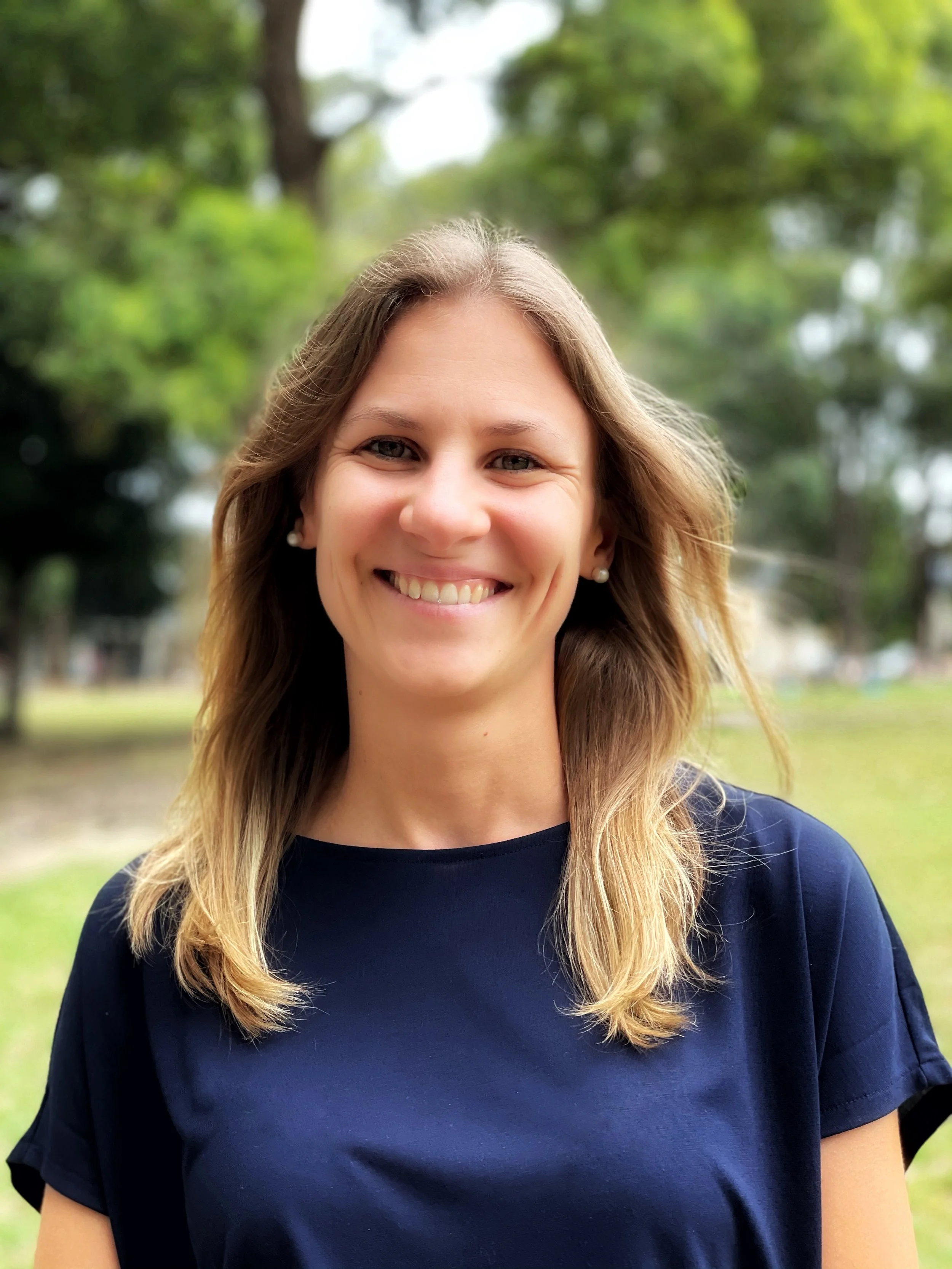
In this episode, Julia talks with a former midwife who moved from Germany to Australia. Damaris Lee shares the challenges of leaving midwifery behind and creating her practice, Mum’s Oasis, in Sydney. Together they discuss the differences in postpartum care systems between Germany and Australia, the transition from hands-on work to virtual support, and what it’s like to be a doula before becoming a mother herself.
Listen Now
About Damaris
Damaris is a postpartum professional supporting mothers and families in Sydney, Australia, and worldwide. With a background in midwifery, her approach is evidence-based and heart-centred. Through her online course, in-home support and virtual consults she supports families to experience a connected and calm postpartum and early parenthood.
Reach out to Damaris here: https://www.mumsoasis.com/
We explore the following questions:
Can you tell us a little bit about yourself and how you transitioned from being a midwife in Germany to working as a postpartum doula in Sydney?
What differences have you noticed between postpartum care in Germany and Australia, and how did that influence your decision to become a doula?
How did you feel about starting your own business was it daunting or exciting?
After completing your training, what were your first steps in setting up your services, and how did you figure out what to offer?
How did you come up with your business name, Mum’s Oasis?
Now that you’ve been doing this work for a few years, what do you love most about it, and what do you find most challenging?
You now offer in-home care, massage, virtual support, and sleep consulting. Do you have a favourite part of your work, or do you enjoy the variety?
What has it been like working as a doula without being a mother yourself? Has this ever come up with clients, and how has it shaped your perspective?
How are you preparing for your own postpartum now that you’re expecting your first baby, and what challenges or growth do you anticipate personally?
Looking ahead, what dreams or long-term plans do you have for Mum’s Oasis and for the future of your work?
If you love this podcast please subscribe leave a 5-star rating and review wherever you listen!
Transcript
Julia Jones:
Hello and welcome to the Newborn Mothers Podcast. And today we're talking to Damaris, who is originally from Germany and now working in Sydney. And Damaris, you used to be a midwife and now you're working as a postpartum doula. Do you want to tell us a little bit about yourself and how you got here?
Damaris Lee:
Absolutely. Thank you so much for having me. It's nice to chat to you as well. My name is Demaris. I am in Sydney here as a postpartum doula. And originally I started in Germany as a midwife and moved to Sydney and long story short, met my husband here so I stayed. And tried to find out what's next for me professionally because it does change your whole life as well to move countries. Registration here as a midwife wasn't as easy and also the system here is a bit different, so I decided to not go down that path again, which was a little bit sad as well in a way, to leave that behind and not knowing because at that time I also didn't really know about doulas to be honest. So I actually thought that I gave that up for good, or at least for the next few years.
And then I was really excited about, finding out about doulas, actually, through seeing my sister-in-law going through postpartum here in Australia. And that was the first time that I experienced postpartum so close, and I was so shocked, to be honest, because she didn't have any kind of support from the medical system and I wasn't used to that from working as a midwife in Germany, because we did quite a lot of postpartum care there. So that led me into doing more research to see if that's the norm, like, what's the deal here with postpartum care in Australia? And that's how I found you, actually, the course and found out about postpartum doulas in general because you said, oh, that's pretty much postpartum doulas pretty much fill the gap that is there in postpartum care. And that's how I ended up working as a doula and doing your course. And that's how it all started.
Julia Jones:
I love it. I hear quite a lot about Germany and postpartum care. I think that you actually might be the fifth person who's German that I've interviewed on this podcast. I should put all the links.
Damaris Lee:
Yeah, I heard a few before.
Julia Jones:
It really is a striking difference, not just to Australia, but I've interviewed someone with an Irish and German perspective and you know, lots of different people kind of go, wow, Germany must be pretty special in that way. I don't think that's the norm everywhere else in the world.
Damaris Lee:
No, it's true. I mean, unfortunately, it's also not perfect. There are many problems for midwives and the maternity care system as well and unfortunately, it looks like it's actually moving into a more difficult path than a better one. But one thing especially for the mothers that really makes a big difference is that established postpartum care that everyone gets through midwives, which is covered by like healthcare. So women don't have to pay for that and it's quite normal. So every woman would get a postpartum midwife, which they can choose themselves, which is nice as well, I think. So you can get someone that you align with and you just have that one person as well that you can rely on, and you just have a question, or you just know that there's someone, if there's anything you can call on and you get those regular visits. I do think that makes a big difference.
Julia Jones:
So then that was an obvious fit for you if you couldn't register here as a midwife and have your qualifications recognised and there's a clear gap in care. So then you obviously came across Newborn Mothers and decided to study.
Damaris Lee:
Yeah, because I did want to, I mean, I knew doulas are not regulated, so I knew I didn't need to do anything, but I also wanted to just learn more about it and maybe see how doulas work as well, because it is a bit different to the care that midwives provide.
Julia Jones:
How did you feel about starting your own business? That's a big change too. Was that daunting or were you quite excited about that?
Damaris Lee:
Probably a bit of both. I was excited to do my thing, to work my way to support mothers the best way that I knew how to do it without having to do anything that someone else wants me to do. But then also of course a bit scared because there's so much that comes with starting and running your own business. So probably still like that even a few years later.
Julia Jones:
It is always a bit of a roller coaster running your own business, isn't it? So did you graduate the same year you started our course in 2021? I think you did it quite quickly, didn't you?
Damaris Lee:
Yeah, I think because at that time,I did a little bit of like other support work and things, but I didn't have much going on in my life so I could just focus on that and I wanted to start the business quite soon after, so I went with the live class. So that helped a lot to be accountable as well and have those check-ins. And then I think I finished after that live class finished.
Julia Jones:
And then what were your first steps after that? Were you clear about the kind of services that you wanted to offer, or did you sort of have to try a few things and figure it out?
Damaris Lee:
I tried to figure it out on the way as well. I always knew that the main part was the in-home postpartum support. I did massage as well when I worked as a midwife, so I had that kind of background in pregnancy and postpartum massage as well. So that became a big part of that, too. Which helped. I think I made a really good connection also through—she didn't train with me, but she trained with you as well— so through your Facebook group, I made a really good connection to a doula, a postpartum doula here in Sydney who's in my area. Which really helped me as well to get started because she could refer a few clients to me. She also did a lot of massage, so that was really something that helped me as well to get into that space. And then, just put up my website, Instagram, make other connections with other professionals in the area, but it's definitely something that evolved over the years. The core is still the same, but kind of changed over the years as well a little bit.
Julia Jones:
I always say that postpartum care is like a calling that's always going to be the main sort of thing, but then how you actually do that might change throughout your life. And your business name is really beautiful. Mum's Oasis. How did you come up with that?
Damaris Lee:
I don't actually know. I actually thought it before our conversation, funnily enough. And I think it just came to me and then it was just like it landed and I thought, yeah, that's it.
Julia Jones:
It is beautiful. It's a name that brings the feeling like people know what to expect from Mom's Oasis. I love it. So now you've been doing this for a few years, you kind of found your groove. What do you love about the work? What do you find hard about it?
Damaris Lee:
I love the work with the mothers, the actual postpartum care going into mother's homes, and just be there for them and see them. I think my favourite is always if I can see them sitting on the couch or lying in the bed with their baby close by and just enjoying themselves relaxing. And I kind of do everything around or if I give them a massage and I kind of hear them snoring or falling off into sleep, like to give that rest, to create that oasis. That's definitely one of my favourites. The hard part is usually the work around, like I'm still not a big fan of promoting or marketing. Every job has that part that you have to do, right? But yeah, that's probably still the part that it’s the boring bit.
Julia Jones:
And you've tried lots of different things now because you've got an online course, you do virtual support, sleep consulting. Do you have a favourite bit or do you just love doing everything?
Damaris Lee:
I do love doing everything. I think that's also something that, the reason I like midwifery as well was because there's so many areas that you can focus on. And the same with postpartum care. There's so much that you can do and I like that because no day it is the same. No visit is the same, no session is the same kind of. I do think my favourite is still that in-home postpartum care and that virtual support, that sleep support, that is something that is also very new. I kind of just started that to establish that a little bit more because the in-home support, the massage that's quite physical and takes a lot of time. So I just wanted to establish something as well that I can do from home, which is a little bit easier on the body. Kind of a bit more flexible as well in a way. But I definitely like the variety and there are still so many more options to go to in the future as well which is quite exciting, I guess.
Julia Jones:
We've always talked about postpartum care as something that can kind of change around your life and the stage that you're at. Can you tell us a little bit about what it's been like being a doula and not yet being a mother yourself? Because a lot of people ask me that they worry that, oh, if I don't have kids, I can't be a doula. But I always think that's a sort of a funny, well, I don't really know why we have that idea because people wouldn't worry about whether an obstetrician has had a baby or whether a midwife has had a baby. So we don't obviously see doulas as very professional. So yeah, tell me, do people ever question you about that? Is it, is it a problem at all? Does it change things?
Damaris Lee:
Not so much. Obviously, the conversation usually comes up because we are in that space. But I think maybe I did struggle with that a little bit in the beginning. Especially, because it's funny, it's like most doulas are mothers themselves, so then they can speak a lot from their own experience, especially in the beginning, I thought through marketing even, I don't know why, but I always thought like, oh, I wished I had a child and I could speak through my own experience. But it really, I don't think professionally it matters. You can be a good doula if you have kids or not. Sometimes it makes it easier, because I can take care of myself very well. Like if I feel that I can't give anymore, I can fill my cup quite easily in a way. Of course, I have a husband to take care of in a sense. But other than that, there's no one that wants anything else from me at home. So I feel like I can really give all of me to the mums that I support, which in a way I think is also quite beautiful and gives that capacity that in that sense probably is different to when you're a mother. But I mean with everything, right? I think comes positives. Like you can give so much when you're a mother as well to other mothers. So there's definitely value in both.
Julia Jones:
I think it's really good to hear that. I do think it's a real myth. I studied as a postpartum doula before I had children myself. And I do feel like this work is a calling and people often know from a very young age that they want to be a midwife, for example, they just maybe haven't heard of a doula. But it shouldn't really be any different. But also when you are talking about lots of doulas can speak from personal experience, but that's actually one of the things that we teach in our training is not to actually share too much of your personal experience. It's better to be a bit more open to different ways of doing things. And sometimes if you've had your own kids, you can be a little bit more judgemental or a bit, a little bit more like, oh, this is the right way or you should try it like that. Whereas when you haven't had your own children, it's much more just open curiosity, you know, like, oh that's cool, like let's try that out or I'm interested why you chose that way. Yeah, it doesn't come with the sort of preconceived notions that motherhood brings.
Damaris Lee:
That's true. But maybe it's true what you said in the beginning that maybe that's how we see supporting mothers not as professional, but more as like as a friend, as a peer. And as a friend you share your experience and that's how you support someone else maybe.
Julia Jones:
Yeah, that's it. But when you're a professional, actually you should be sharing more evidence-based information or like asking questions.
Damaris Lee:
That's true.
Julia Jones:
So what's next for Mum's Oasis? Because things are changing.
Damaris Lee:
Yeah, that is true. So I am actually expecting my first baby myself. So things are going to change. I will be a mother soon myself which of course changes things from Mum’s Oasis as well. So I'm in a bit of a transition. That's why as well, I added those virtual supports. I went a little bit more into that sleep support to try a few things to see where it goes. And then obviously it's a bit, it's already starting to feel a bit sad in a way as well because I know I need to leave some things behind, even if it's just for a season. But even now it's like I'm kind of slowing down on the massages because they're quite physical. And not sure how long I can go for with that. So, but that's like one of my favourite parts as well. Like I feel like I'm like such a touch person in a way. And that's always one of my favourite parts of my visits as well. So just starting to leave that behind definitely is like a little bit of a grief process. I don't know if that sounds too much, but there is a letting go already, right? Which is quite interesting.
Julia Jones:
You're probably going into it a bit more with your eyes open than most first-time mums as well. Lots of first-time mums still think, oh, everything is going to be the same. I'll be able to just go back to normal.
Damaris Lee:
No, it's true that. I feel so privileged because I do know so much. And I've experienced so many different postpartums, I've seen so many mums and heard so many stories which I think is such a huge privilege because that's what we don't have necessarily anymore in our society. And most mums, right? I mean, you know that better than anyone else as well. It's like goes into their first postpartum experience, very un-experienced and with a lot of unrealistic expectations because postpartum is such a closed space and we don't necessarily talk honestly about it. So I do feel very privileged that I have been in so many of those closed spaces.
Julia Jones:
Are you enjoying planning your own postpartum? Have you already thought about all the ways that you want to be looked after?
Damaris Lee:
Definitely. I'm quite excited, yeah. To finally experience it myself as well. Because I do also know in a way that, or I think experiencing it yourself will also be different, of course. Right. So I'm definitely looking forward to just resting, having skin-to-skin with the baby which I know will be a challenge as well for me. Have other people care for me, because funny enough, that also doesn't come very natural to me. So I also know that I need some personal growth and there are definitely some things that will be challenging for me personally as well. But yeah, I'm very excited for that season.
Julia Jones:
Do you ever think about where you want to be with your work in sort of, 10, 20 years time? Or are you not really sure just seeing how it goes?
Damaris Lee:
I mean there are definitely dreams. There, the big dream was always to actually have a location and to bring together a lot of different professions to really care for mothers in a very holistic way. So that's like a very big dream, big long term dream. But then it's definitely, and also is Germany in that sense is still on my heart. So to open it up and that's the beauty of the virtual support as well, to open it up more to the world in a sense. But to be honest, how exactly that's going to look like, I don't know. Definitely would like to bring together more like bring moms together in groups or online spaces, something like that to create more community as well. I haven't done that yet so much, but that's something that I see. There's a huge lack and gap as well.
Julia Jones:
I love how flexible you are and open to trying anything. And this is clearly your heart's work, you know? And you are open to any way of delivering it that works, but you just love mums. It's really beautiful.
Damaris Lee:
Thank you.
Julia Jones:
Well, are there any last things you want to share?
Damaris Lee:
No. Sounds all good.
Julia Jones:
Beautiful. So if anyone wants to know more about you, it's mumsoasis.com. You're based in Sydney, and we'll share the links with the show notes as well. Thank you so much for sharing that story with us, Damaris, and all the very best with your birth and your postpartum.
Damaris Lee:
Thanks for having me.
