
From registered nursing to family-centred doula support
Interview with Janine Armfield
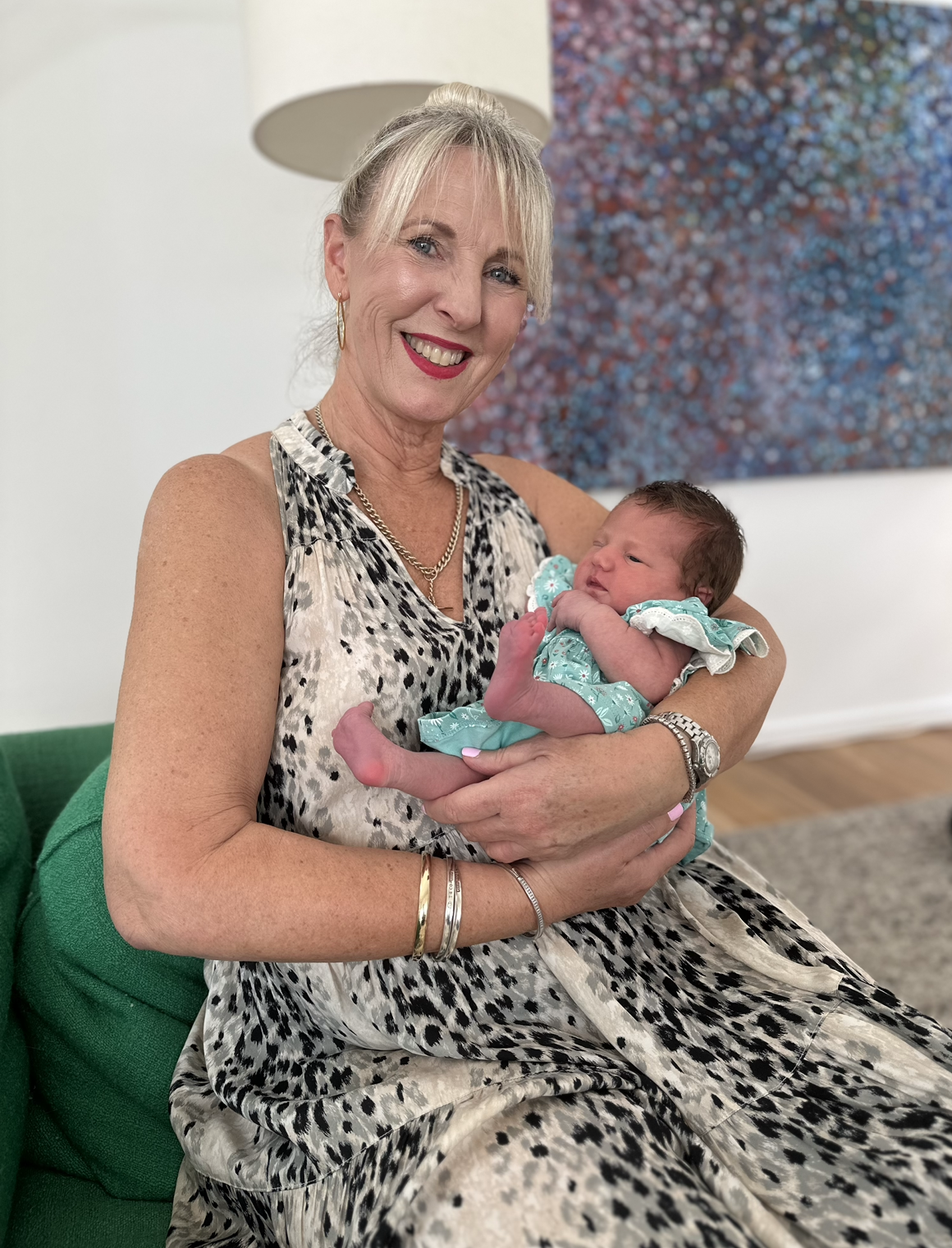
I chat with Newborn Mothers graduate Janine Armfield from Blossom Doula Care. Together we discuss Janine’s transition from nursing to postpartum doula work and the evolution of her business. At the core of this conversation, we explore the importance of educating families, especially grandparents, about newborn care.
Listen Now
About Janine
Janine is a mum of 3 awesome grown-up kids! She has been a registered nurse working in obstetrics for over 20 years and as an IVF nurse for 15 years. She is passionate about anything to do with pregnancy, birth and parenthood, and providing support, knowledge, love and care for mums, couples and families throughout the whole journey. She has a special love for the postpartum period and I am so blessed to be able to do what I do as a doula every day.
Reach out to Janine here: https://www.blossomdoulacare.com.au
We explore the following questions:
What led you to transition from being a registered nurse to becoming a doula, and what inspired this career change later in life?
How does the role of a postpartum doula differ from traditional nursing or midwifery in terms of supporting families?
What is the importance of continuity of care for new mothers, and how does a doula support this journey from pregnancy to postpartum?
How can postpartum doulas educate families about the realities of newborn care and postpartum recovery?
What is the value of building a network or "village" for both the families you support and yourself as a doula?
How did you overcome the challenges of starting your own business, especially with the business side of things like websites and bookkeeping?
What are the unique challenges faced by new mothers today, such as information overload and societal expectations, and how can doulas help address these?
Why is educating the partners and extended family about postpartum changes so critical for the mother’s recovery and adjustment?
How has the postpartum care landscape evolved, and what changes have you seen in the understanding and approach to supporting new mothers?
What advice would you give to someone considering a career as a postpartum doula, especially if they’re starting later in life?
If you love this podcast please subscribe leave a 5-star rating and review wherever you listen!
Transcript
Julia Jones:
Hello and welcome to the Newborn Mothers podcast. Today we have Janine here, and Janine has been working with mums and babies for a very long time, but more recently transitioned from being a registered nurse into being a doula and working in her own business. And Janine, I'm really happy to have you on the show for a few reasons. You're a beautiful, magnetic person. I know a lot of people really love to spend time with you and you're really engaging and warm and that's obviously done really well for you in this career, but also because you made this transition to being a small business owner a little bit later in life than than people kind of usually think, that you can do these kind of things. And I think that's a really inspiring story too.
Janine Armfield:
Oh, thank you so much to be here. Thanks for having me. I'm really good. How are you?
Julia Jones:
Good, good. So let's go back to the beginning. What were you doing before you'd even heard of a doula and before you knew that this was what you wanted to do, what were you doing first?
Janine Armfield:
So way, way back. I trained as a registered nurse in the eighties, but I was chatting to my mum this morning who's 90, who only retired herself three years ago. So she's quite an inspiring person in my life too as a registered nurse. She was as well. I think always in my life, my mum was involved with Plunket, my grandma was involved with Plunket, which is sort of like early childhood here. It was sort of like a caring community for newborn mums. But way back, my nanas joined that in 1934. So, all my life I've been a babysitter, love babies, love families. I just have had that sort of history. And then I became a registered nurse. And at that time I knew during my training where I sort of wanted to head to. I wanted to work either in paediatrics or in obstetrics.
And I was very lucky, my first placement was in a big obstetric hospital in Auckland where it was sort of like a women's health hospital, so the biggest one in Auckland. So I was able to spend my years there working in all sorts of areas, antenatal clinics, postnatal wards, postnatal clinics, delivery suite, neonatal and maternal intensive care. So that was where I absolutely loved to be. Spent many years on a postnatal ward there. And luckily the breastfeeding ward, which was really nice 'cause we had a lactation consultant who was the charge nurse at the time. So did that. And then, a couple of the great OBs that I worked with there asked me to join them in their IVF clinic. So I moved from the hospital to work with them for the next 15 years. And alongside that, I was sole charge of a sort of boutique postnatal hospital.
And that was really great. So I was able to do that along the way as well. During this time, I had my two babies and then had my third baby, before I moved to Australia. And my littlest one was two and a half when we came here. So I was a stay-at-home mum for a while then and all the way through. And I was able to sort of do my work like in the IVF clinic. I could take the bloods in the weekend, work in the weekend. So I sort of managed to make it work and my husband's always been really supportive of my career and what I want to do. I actually had three years in the UK as well with my two big kids before I had my little one.
And then we came back to New Zealand, moved to Australia. And at that point I was thinking I had never done my midwifery training, actually I had had two opportunities to do midwifery. I got in and then I started at the IVF clinic. And I said to them, look, I'll put that off 'cause I want to do this. And then when I next applied, well they contacted me actually and said, are you ready to start? Then I had had my first baby, so I was like, no, this is not a good time to start. But in New Zealand you didn't have to be a midwife to do what I did, which was really lucky 'cause I was able to work in all these areas and not have to be a midwife. And then I thought, okay, I've come to Australia, I will perhaps, you know, do my midwifery training now where the kids were bigger and they were at school and I could sort of make that work.
I then joined an organisation called Raise and I worked in their mentor programme and they were amazing. They had a programme where you just work with one child every week for a whole year and mentor them within the school environment. I went to TAFE and did mentorship training and then the Raise organisation also had a programme called Bump, which was mentoring, teen and young pregnant mums. And so, they suggested I move to that programme as well. So I did both and that was amazing. And then it was during that mentor programme that I found the word doula, because one of my mums that I was working with, we did a dream building day for her and I said, oh, you know, what is it that you'd like to do?
Like, you've got this beautiful baby and you've got this lovely life ahead. What is it you'd like to do? And she said, I'd like to be a doula. And I said, well, what, what is that? So we sort of spent this time working how she could possibly bring this into her life and move forward. And she had great family support, which was incredible. Never thinking of a doula for me because I was heading down the midwifery route and I had sort of applied there. And then, it was such a lovely day and this young mum was really inspired and I thought, she's gonna be an amazing doula and this sounds like an incredible thing for her. And then the next day I happened to be at TV playing tennis with a really good friend. And I said to her, do you want to have lunch after the game?
And she said, I can, but I'm meeting my first client at lunch, this afternoon. And I said, oh, that's amazing. What are you doing? And she said, I'm training to become a doula. And I said, I heard that word yesterday. And she said, you'd be a great doula. I said, no, 'cause I'm gonna be a midwife. And so that's how that started. And then weirdly, as the universe does do, the woman that owns the doula college phoned her while we were having lunch together and she said, oh, I'm sitting with somebody right now who I think would be a really great doula. And she said, well, look, if she wants to know more about it, get her to gimme a call this afternoon, which I did. And this was on a Tuesday. And by Friday I was in my first class of the doula college, which is incredible because she said, look, there's been a vacancy, it doesn't normally happen.
And I thought, do you know what, this is exactly what I've been looking for. So that continuity of care where you can look after somebody antenatally through their birth into their postpartum journey. And just because I used to admit these beautiful couples from delivery suite up into my postnatal ward, and I think, gosh, what has that journey been like? And you know, imagine if you could sort of just have that sort of looking after somebody all the way through. And so I had always been looking for some sort of the thing that you are with people before, during, and after that had their baby. And we used to have people in the hospital for seven to 10 days back in the day. So it was a really beautiful start, and you'd be able to sort of set them up with, you know, your milk had transitioned in and you learn to bath your baby and couples went home feeling really confident.
And these days you get sent home from hospitals so quickly. And I think they sort of arrived home and from a private system, I don't know how it is where you live, but here there's minimal contact once you get home. So anyway, I started the training and I did that for that year during training in my student births. And that was sort of my start to being a doula, which I just thought, I am absolutely doing exactly what I should be doing. I just absolutely love it. Like you say, it's my own business so I can work any hours I want to do, I'm not stuck to sort of shifts where you have to leave and say goodbye and not see people again. And so that's sort of how that started. So it was pretty organic and nice and it's just gone from strength to strength from there. And I really love it. It's a fantastic career for me. And yeah, I was in my fifties when I started it's just been beautiful.
Julia Jones:
It just sounds like the door just opened for you, like everything is meant to be.
Janine Armfield:
Yes. And then I discovered you and your programme because I was just so vested and involved in this postpartum journey and these beautiful babies and the families and trying to help them with that smooth transition into parenthood. And so I discovered you and your beautiful course and I did that and I recommended it to so many people. And that was fantastic because it was a real adjunct onto what I had already done. And certainly from the business side of things, it was really helpful because I can do what I do. Like I can, you know, settle a baby any day, but the business side of things and tax and invoicing and all those things, it was really helpful to have you and your community where people are like me, where you're starting off in your own business. It was really great.
Julia Jones:
Yeah. So that's an interesting transition because you were already caring for mums and babies that, you know, wouldn't have been a huge change, but it sounds like the actual business side of things was the bigger challenge. So did you any doubts or hesitations about that? Or what did you do to keep keep being able to move forward?
Janine Armfield:
Well, luckily there are so many beautiful people who are such champions of me and my business and this world. So I ran a few mothers groups back in the day and one of my gorgeous mums who was one of my soul mamas, she's really helped me. 'cause she's obviously a business person and really clever and incredible. So she's been really helpful with things like website. My friend that I had lunch with, she had already obviously been a doula, she was finishing her training. So she had already met somebody that could build a website. So she connected me with her very early on, which was fantastic because it was a sideline for her and she really loved it.
And she gave me the time to go to her home and sit there and choose the logo and choose the word. And so everything on my website is me and who I am. So it didn't have to be complicated, which was really nice. 'cause I don't do blogs and things. So it's sort of like a landing page of where I am. And she was really helpful. So she set that up and she set up my email and Instagram and those sorts of things. And then from there people have sort of helped me along way and obviously I learn, I do courses all the time and I'm sort of always learning. I got a great accountant as well. They've been fantastic. So I think I just meet the right people along the way and if I needed any help with anything or tweaking my website, I mean, I can do that myself obviously now. So it just sort of grown to it where it is and I've added things to my repertoire and that I'm always studying and learning and now I'm training to be an IBCLC too.
Julia Jones:
That's such a good attitude because I think a lot of people think, oh, I don't know how to do that so I can't do it. But you really have demonstrated that you can learn new things, but also you can ask for help. Just because you're a solo business owner doesn't mean you have to do everything. You can ask other people to do things for you. You don't have to be good at all of it. All of it needs to be done. But like, I have never understood bookkeeping, never in my, you know, whole business life. Yeah, so there's definitely like parts of running a business like website stuff I quite enjoy. I find that's more creative. But anything to do with like, taxes, bookkeeping, accounting, I will outsource that every single day.
Janine Armfield:
Oh, that's so good to hear. Well, there are people that love it and they're so good at it and they're so passionate about your business, they're happy to help. And I think that's really finding the right people in your life. And I also find that even in my work, I've met the most beautiful people along the way. And I have such a cool group of people that I refer to all the time that create the whole village that comes with me, along with me when I'm looking after a family. I feel like it's really important to know what lane you're in and where to refer and you can sort of just see things along the way. And the trusted sources, that's what we sort of talk about with my families. Having trusted sources where you know that everybody has the same passion that you do and the expertise and that you are all on the same page. So it's a little bit like that for the people around you that help build your business. It's like those people you have while you are in your business.
Julia Jones:
So you're building a village for your client, but you're also building a village for yourself as a true business owner.
Janine Armfield:
That's a really good way to put it. That's absolutely right.
Julia Jones:
So magically this door opened for you and you just went Yes. I'm gonna give it a go. You got some help starting your business. Tell me about getting your first client and what that felt like.
Janine Armfield:
Oh, that was amazing. So, we had to do three student births during our certification process. So, I connected with She Births, which is a fabulous birth education programme here where you could go in and sort of help for the day. And it was great learning. I got my first client there. I helped for two days and I got my first birth client there. And from there, because my passion was the whole transition and helping through, then I was looking after them after baby came as well. And actually so much, even from then, from those three births and the ones that I got after that, so much of my business is word of mouth.
If I've worked with people, then they'll tell their mothers group or other practitioners too, you know, when your quest is to sort of find your referral network. So in the early days, I did a lot of meeting beautiful people who I'd heard about or met or my clients had used. And so I'd go meet them and sort of like find out how they work and I really like to go and see how they work and so from there you get referrals. So it really has grown organically from then.
Julia Jones:
So that was five years ago. What's changed in that time? What are some of the things you do differently now and the lessons you've learned along the way?
Janine Armfield:
Oh, that's such a good question. I do a lot of postpartum work now. So I trained in 2017 and then obviously did your course after that. I think what has changed — about me or my business do you mean?
Julia Jones:
All of it.
Janine Armfield:
Obviously we've had COVID in the middle, which was just such a tough old time. I've developed a workshop as well that I started because what I found is when I arrived in somebody's home, and I hadn't met them before and we hadn't done any prep about the postpartum before they had their baby, I was finding so many people just so shocked at the reality of having a new baby, whether it's night sweats or how often baby feeds or those sorts of things. So that's changed. I started my own course in-home education workshop and that's been a big change and it's been really popular and I did it in classes to start off with, but now I do it privately in the home. So I can go in, it takes two and a half hours and I take my real life babies and we do a practical session and we talk all about what the reality of mum's healing, physical, emotional, hormonal, how dad or partner, if they have one, fits into all of this. And how we look after them to be able to look after mum. I always say mum is a hundred percent at the top of the pyramid. If mum is okay, everybody else is okay. So the focus has to be there for everything else to be okay. So that's been really nice. That's been probably one of the progressions of my business.
Julia Jones:
That's true for me too. I think when I first started doing postnatal work, I thought it would be more care. And as I realised that our society has such limited understanding of postpartum and also so much misunderstanding, so many incorrect expectations and information. and that's why the new course—I think you did the old course when it was still called the Collective—but the new course is called Postpartum Education and Care Professionals because the education is a critical piece. So I completely agree with you in that learning. It’s definitely one I've had over time as well, of adding more education to the care.
Janine Armfield:
Yes.
Julia Jones:
And it amplifies the impact.
Janine Armfield:
Yeah, it does. I think it's educating the people around the new family and certainly partners have said to me, oh God, thank goodness I knew about that hormonal change immediately after birth. Because I always say mums look the same, but they're just not the same. So let's look at what's going on. 'cause they're not recognisable to themselves sometimes either. So that's been different. I remember last time we had a chat about the amount of grandparents that employ me to work with their families, which has been so beautiful. And during COVID, it happened a lot from overseas. I'd get emails and they would pay for the care and I'd go and look up the family and would put the grandparents in the group chat.
And then they started coming to Australia and I started meeting them, which was just gorgeous. Now grandparents from here ring me and employ me to help look after their family. It's massive. It's such an incredible transition in their life. But they recognise they haven't dealt with a brand new baby for probably 30 odd years, sometimes 40 years. So we all work together and it's so nice and our grandparents are like, oh my goodness, remember when we used to do that? I can so understand why we do this now and say, yes, I know. 'cause I was, I was doing this 35 years ago too. So I've sort of grown with the transition of our knowledge of the newborn and our knowledge of the reflexes they have when they're born and the knowledge of the birth journey for a baby and a mum, which are two separate journeys.
And it used to be a lot of like, go and visit the mum and everybody wants to see the baby. And it’s become more apparent that you really need to come and look after the mum and look after the baby too. So yeah, I think the care probably has stayed the same. I think it's probably just a lot more knowledge now too. And certainly breastfeeding and also back in my day we didn't have Google and we didn't have Instagram. So these beautiful new families have got so much information coming in all the time, which can be so overwhelming. I think that's really exhausting for new mums because they're so desperate for the information and often they don't have family.
We live very transient lives now. The young couple are here but family are a long way away. So where do you go to find out the information to normalise what you're going through and to encourage you and give you the permission to settle in to that slow start. And I think that they're so relieved to have somebody in their life that really just promotes slow down. It's okay, it's beautiful, you know, it's such a quiet time and get time to know your baby. And yeah. So that's what probably has evolved over the years, I'd say.
Julia Jones:
So now you offer everything from fertility all the way through to postnatal support as well as some workshops and educational components as well.
Janine Armfield:
Mm-hmm.
Julia Jones:
What do you think's next for you? Are you just really happy doing this forever or have you got some other plans and ideas as well?
Janine Armfield:
There's always things in the pipeline. It takes two to five years to finish my IBCLC training and I have to do 500 mentored hours. That's definitely gonna be the next thing 'cause it's a lot of of study and I think that will be what I'll do as well. I can't imagine myself not being a postpartum doula or a doula. I think, that will be really nice and it'll be interesting how you do one and the other and both. And you can't not bring that knowledge in. And what I'm learning all the time about about babies and that all function I'm finding just completely fascinating with their little reflexes and what their little bodies do. They're fast, they're amazing. These wee babies, they're so clever and they know what they're doing even in the birth process, you know, if the space is ideal for them and they've got the space to do what they need to do. They do what they need to do. Nature's amazing. Never stops. Fascinating me every day.
Julia Jones:
I love it. And you're obviously such a lifelong learner because you, you know, you never stop being excited about these things.
Janine Armfield:
No, no, you don't. You don't. And I think, you know, developmental milestones for babies I find really fascinating as well. And, you know, what they're capable of and what, you know, when we stimulate them enough and sleep. 'cause I do a lot of sleep study too. I do a lot of work with sleep. So sleep and life and stimulation and feeding. And if feeding goes well, sleeping goes well. And you are always learning. And no two babies the same, no two families the same. I work a lot with single mums by choice and they're always incredible to work with. Nothing stays the same.
Julia Jones:
What would you say to someone who's maybe in their fifties and thinking about doing something like this?
Janine Armfield:
Oh, definitely do it. Go for it. Being busy is so nice and doing something that you really love is really important. My family and my kids, they're my absolute priority and I love spending time with them. So having my own business means that I can do that. You know, I will always prioritise what they're doing or what they need. And they've been such great champions of mine as well because obviously they're older now in their thirties and early twenties and they're so great. Even when I started this, if I go to a birth and I had other kids living at our house at the time, they're always like, how did it go? Well done.
Julia Jones:
As a mum of younger children, I hadn't really thought about that aspect of being a mum of older children that you do wanna still have your own career and actually your fifties and sixties is often the most ambitious time in a person's career. However, you still wanna make space for those adult children and they probably come and go a bit more. Like they're not there every day like they are when they're little, but when they do come home, you wanna a hundred percent be there. So having that flexibility of your own business gives you the best of both worlds.
Janine Armfield:
I think that's the beauty of it. When you're working in the system, as obviously I have done for many, many years, if you want to go away or have time with them, you've got somebody saying, you can't go there. It's just like, oh, don't tell me I can't. This has been really good for that. I do love that side of it and the fact that I'm still learning. Better keep using our brains. It's never ending. You probably find the same thing, 'cause you are growing and building your business and changing it to meet your needs and your family's needs and the needs out there all the time too. So it's rewarding, isn't it, when you're doing that.
Julia Jones:
Absolutely. I can't imagine being a mother in any other way. They're having the satisfaction of both the career but also the flexibility. It really does meet my needs and my family's needs.
Janine Armfield:
And your family always know that you were always there for them even if it's a phone call or visit.
Julia Jones:
That. Yeah.
Janine Armfield:
And my husband as well, obviously, 'cause he's, you know, he's still working too. And he in a busy career and I think you have a balance of all the things you really wanna do. And if there's something coming up, then I don't take somebody on for that time, but there's always families coming in. They're all at different stages of their journey. So it sort of works and I don't have to devastate somebody, I can't take you then. 'cause I absolutely know that I can. 'cause it sort of works out. You've got somebody at eight weeks or three months and then you've got one today, one this morning, which is so beautiful. So I absolutely know I'll be there tomorrow and I'll settle them into home and take them a meal. And I know that my other are older and I'm working with them for the rest of the week. So it sort of works its way really well.
Julia Jones:
Yeah. That's so beautiful. Your website is blossomdoula care.com au.
Janine Armfield:
Yeah.
Julia Jones:
And people can find you on Instagram as well?
Janine Armfield:
I'm not really good at posting but I love a story.
Julia Jones:
Think you are better than I am posting on Instagram.
Janine Armfield:
It's funny, isn't it? You know, you sort of have things that you do during the day and I'm very aware of people's privacy as well, so I never put anything on there. If somebody doesn't say, please post this or please do that. But if I meet people, they're often like, oh, it's so lovely. I love your Instagram. I think, oh, maybe I've walked with prams for two weeks, but they love that. So it's nice.
Julia Jones:
Amazing. So if people can find you at Blossom Doula Care. And we'll pop the links up in the show notes. Thank you so much for being here. Have you got any last things you wanna share?
Janine Armfield:
Just thank you for doing what you do and as I say, I've referred so many people to you in your course. And I think that we need to dedicate a lot more time to this postpartum space and care for these new mums. And there are more postpartum doulas out there, which is fantastic, and I refer to them as well. We have this beautiful community, and so thank you for doing what you do. It's great. It's a really important space because it starts you off on your life as a parent.
Julia Jones:
Oh, and likewise, thank you for doing what you do.
Janine Armfield:
Thank you. Well, I absolutely love being a mum and a parent, and I so love working with all these people on their journey. They've got such an amazing life ahead of them with their little ones.
Julia Jones:
Beautiful. Thank you so much.
Janine Armfield:
Oh, you're welcome. Thank you for having me.
