
From discarded to held: reviving the lost art of mother-centred care
Interview with Keturah Stoltenberg
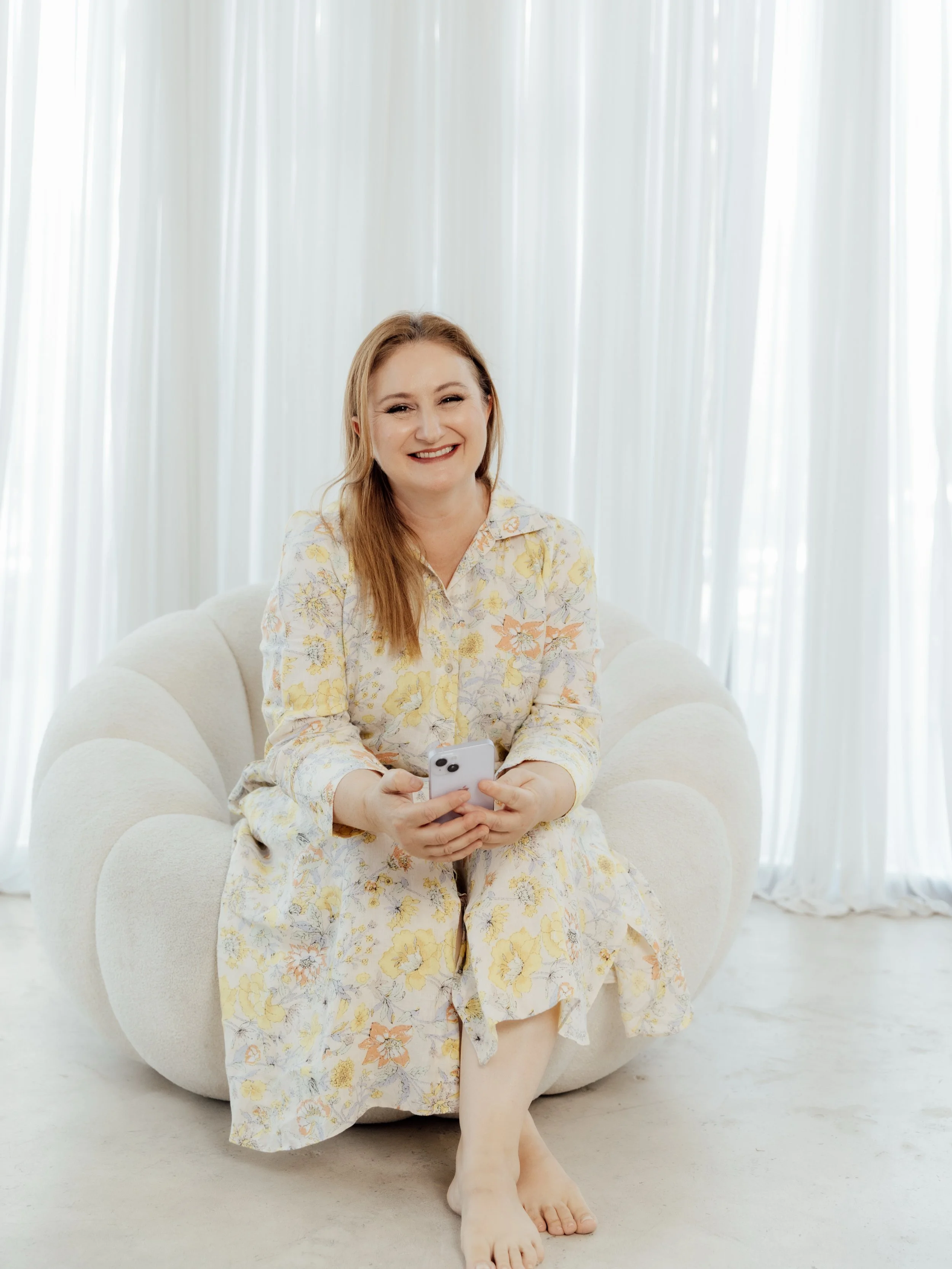
Julia chats with Newborn Mothers graduate Keturah Stoltenberg, a postpartum doula, massage therapist, and bengkung belly binder based in Sydney. Keturah shares how her early experiences of motherhood inspired her to offer the kind of care she wished she had received. Together they explore the emotional impact of mothers feeling “discarded” after birth, the underestimated value of simply being seen and heard, and the cultural importance of reviving traditional postpartum practices. Keturah also introduces an upcoming educational training she is offering for postpartum professionals, mothers, and their families to learn how to safely and confidently practise the traditional art of Ayurvedic Belly Binding.
Listen Now
About Keturah
Keturah Stoltenberg became a mother at age 24. She has two adult sons named Ezra and Otto. She loved being pregnant. Both of her births were fast, but not without complications. It was a shock for Keturah to be so physically wounded and yet so immersed in meeting this new life.
It didn’t take Keturah long to find her calling to work with perinatal women. She is incredibly passionate about helping women transition into motherhood with grace and confidence.
The strong messages Keturah received when she became a mother were that this was a solo role, and she should be able to manage the physical recovery, emotional fragility and little sleep. This did not feel right to her. She wishes to give to other mothers something she did not get much of—and that is reassurance, nurturance and support. She now focuses her work on Postpartum Support, which includes emotional support, nourishing food, herbal tonics, comforting massage and Bengkung Belly Binding.
Reach out to Keturah here: https://www.motherhoodwithketurah.com.au/
Join the waitlist or learn more about her upcoming Ayurvedic Belly Binding course here: https://theartofbellybinding.my.canva.site/
We explore the following questions:
What first inspired you to work with mothers during the postpartum period?
Can you describe what your own postpartum experience was like?
What were some of the early steps you took towards becoming a postpartum doula?
How did you build confidence in your postpartum work after completing the Newborn Mothers course?
What does a typical week of postpartum care look like for you now?
Why do you believe emotional support is just as important as physical support for new mothers?
Can you share how you use belly binding in your support work and why it matters?
What are some of the biggest challenges you’ve faced in helping mothers access postpartum care?
How do you help women understand that they deserve support after birth?
Why do you believe postpartum care should extend beyond six weeks?
What’s your long-term vision for supporting mothers through all stages of life?
How does your podcast, Postpartum is Forever, reflect your beliefs about motherhood?
What role do cultural traditions—like belly binding—play in modern postpartum care?
What advice would you give to someone who feels called to do this work, but lacks confidence?
If you love this podcast please subscribe leave a 5-star rating and review wherever you listen!
Transcript
Julia Jones:
Hello and welcome to the Newborn Mothers Podcast. Today we have another graduate popping in to share a little bit about her postpartum career journey. Keturah, welcome to the show.
Keturah Stoltenberg:
Thank you, Julia. I'm happy to be here.
Julia Jones:
So Keturah is a postpartum doula and a bengkung belly binder. You've also done a lot of beautiful cooking. You do some matrescence education and you do mostly in-home care for mums in the Sydney area. Do you want to talk a little bit about, let's go right back to the beginning. What made you start out on this journey?
Keturah Stoltenberg:
Hmm. So I think like most women, it kind of gets birthed from your own personal experiences. But if I was to go back even further to being a young girl, I've always had a very nurturing, sort of motherly kind of mindset and personality. And I remember always being very fascinated by a woman's pregnant belly, and I wondered how they birth. And I was quite fascinated by the role of a mother. And as a family, I was sort of like an only child because I was a latecomer and my brother and sister were much older. And as a family we would have a lot of family friends that were families. They had young children or grandparents. And I would sit for long periods of time with my mom and dad in these people's homes.
And I was very drawn to these people that I felt needed nurturing. I remember feeling very empathic towards mums, and I thought, wow, this is something like, I would prefer to be around mums of young children and help them out and you know, spend time with them than I did people my own age, actually. And so I always wanted to be a mum. And so I became a mum quite early at age 23, and that was planned and birthed this baby. I absolutely adored being pregnant. I really embraced all of it and did the birth thing fast and furious but not without problems after labour, which, you know, third degree tear, blood loss, all the things. And I remember just kind of being discarded, like I birthed the baby and I was no longer needed. And it was kind of really like weird, but, you know, I put it aside and got on with it because that's what you do.
But I remember along the way thinking there's something not right here. Like it doesn't feel normal and natural to me to sort of just be left on my own. I didn't have a big support network. No one my age was having children. My parents live far away. And I thought, I want to work with mums. I think that mothers need a lot more support than I'm getting, and I want to be able to give others what I know would've been helpful for me. And so that's where it started. And my oldest son is 24. So this, I started working towards this goal sort of more than 20 years ago. And I started as a pregnancy, birth and postpartum massage therapist. But when I did the training it's interesting that there was, I said, okay, well, I'm here to learn massage, because that seemed like the easiest way to get in with something that women would want to have.
But do you have a course about mothers and massage? And they were like, no, nothing like that. As we know, mothers are not sort of put up there as a priority. So I searched and searched and was able to specialise in that area. And from the very beginning, I started working in postpartum wards in hospitals, some of the bigger hospitals in Sydney so that I could start on my way with that client base. So yeah, right back then I thought, I want to help mothers. The first way I'll do that is become a massage therapist and work with women. Then I moved into becoming a doula in 2009, I think I graduated. But once again, birth doulaing is something that I did for quite a few years. There wasn't any kind of demand or talk about supporting a woman after she had the baby. It all ended when she birthed the baby.
So fast forward a few years later, I come across your course and I thought, this is it, this is the course I've been looking for for years and years. So I had the experience, I felt I had the skills and the knowledge, but just that missing piece of the confidence that I had a certificate to back me up and some qualifications in that area. So I was very, very excited to start your course. I think I even chased you to please, please, please hand me some of the course content before the enrollment.
Julia Jones:
I love that story. Keturah, a few things really stand out. And one is that it really is a calling. I bet there's a lot of people listening to this going like, yeah, I felt that from a really young age too, but it's not an obvious career path. People don't know how to, to find that that start, you know, that you were looking for. But also the other word that really stands out to me is discarded. It's just when you said that, it just was such a visceral feeling for me that, that it really is how we treat mothers, I feel, it’s like, you were the vessel for the baby, and now it's almost like you are nothing. You don't even exist anymore. People just don't even notice. And that is such a difficult part, I think, of becoming a mother, being discarded. I think that's such a powerful word.
Keturah Stoltenberg:
It's quite shocking actually, isn't it? Because you, you sort of feel quite special when you're pregnant, making a fuss and, you know, a lot of people want to touch your belly and they're very excited, but it's like afterwards it's quite a shock and very hard to process what's happening here.
Julia Jones:
Afterwards, you're almost an irritation. Like, you know, your baby's crying and people kind of just want you to be quiet and get out of the way and stop being annoying. It's true. Yeah. Whereas when you're pregnant, you feel like everyone's like, you know, in awe of you thinking that you're so special and beautiful, and what a wonderful thing.
Keturah Stoltenberg:
Yes, totally. So right back then I thought, I think this is really where women are needing, like, yes, birth support is amazing and needed, but I really felt this strong desire that we needed to support women afterwards. Yeah. It was just a matter of time before I was able to do that.
Julia Jones:
So tell me, not now what you kind of do week to week. What what do you love about doing postpartum care now, you know, 24 years later? And you're actually doing it.
Keturah Stoltenberg:
Yeah, I love, I mean, I've been doing it now since I think the, your the course role was at 2019. Was it about then?
Julia Jones:
I think it would've been, I should have checked before we started recording, but that sounds right to me.
Keturah Stoltenberg:
So probably five or six years in saying that, I did do postpartum support before then because the course that I did covered postpartum in a very, very minute way. But not to the extent that I was able to get the confidence from your course. But yeah, so I guess there are so many ways that we can support women. I personally think that the emotional support is one of the most valued ways, but least valued in society, but most valued in that woman's experience. And so that is probably my favourite because I do have that kind of empathetic personality. I like to sort of see straight away how's she going? How is she feeling? How is she adjusting? Is she feeling like she's been discarded? You know, is she feeling like she's been, has she been fed? Has she been looked after? Has someone asked her how she's today? How is she feeling?
So a big part of my work is very mother-centred into her matrescence. I'm sure that word's come up quite a bit on your podcast, but basically it's the way that we change and transition as a mother as when we go from a non mother to a mother and then a mother of subsequent children. But yeah, my main focus would be to check in with her immediately. And then from there, the visit might look like massage. So I have my massage table and come in and do the massage, bengkung belly binding. And that is a traditional style of belly binding that's traditional in cultures in Indonesia, Malaysia. And I think that women are starting to become aware of these sorts of things in our country that have always been around, but we're sort of a bit slow in the uptake. I do bring nourishing food. I don't usually do it in-home. I bring that along with me. I can do baby massage, so I can train the family on baby massage, but basically I'm there to serve her. So whatever way she feels is needed on the day, it could be many and varied things.
Julia Jones:
And what I'm hearing as well is you offer a lot of different physical kinds of support, like massage, belly binding food but also that might be what makes people book, you know, and lock in a date and kind of prioritise it. But that actually, that deeper matrescence work and that emotional support is what makes the bigger difference.
Keturah Stoltenberg:
I believe so. It's a big part of what I felt when I became a mother is that, like we said, discarded, we just want to be heard. We just want to be valued in our feelings. We just want to be seen in our experiences. So I feel like that's the piece that a lot of people miss, the old saying of holding the baby but not holding the mother. So, if she wants all these other things, great, but also I'm there for her in whichever way she needs, not what she thinks or thinks she should need.
Julia Jones:
What about some of the sort of challenges that you've faced working in this field? What are some of the hardest things about doing postpartum work?
Keturah Stoltenberg:
Let me think. That's not a question I was thinking about. I think, and maybe we've discussed this a little bit before together, but I think just her valuing that she does need, that she deserves support. Yeah. And I feel like there's a lot of selling the idea to partners or family members. And like you just said, she might be able to justify getting some of the physical support because again, that's sort of something that's starting to be recognised that she needs physical support, her abdominal muscles all might be pulled apart. She might need massage because she's suffering from some post-pregnancy ailment or her hips are really not really working as well as they should be. And of course, food, especially if it also benefits the partner and the family, again, that's something we all require. It's a basic need, but it's some of those other things that might not be looked upon as, as necessary is probably a big challenge, is the fact that we are still being governed by this myth that we should be able to do it on our own.
Julia Jones:
I think so. So what you're saying is actually some of the most valuable things that we can offer and the ways that we support a mother are not actually valued socially.
Keturah Stoltenberg:
Yeah. I'll never forget this time when I walked into one mum's home and I walked in and I said, oh, how are you? I'll put the kettle on. Would you like a cup of tea? And she burst into tears. And I said, oh, sorry. Are you okay? You know, has it been a hard day? And she said, I can't remember the last time somebody offered to make me a cup of tea. And I thought, wow, that is such a small thing that, you know, obviously it doesn't take much on my part to make her a cup of tea, but how much value she got out of that small act of kindness, which, you know, may have physically warmed her up, but it also emotionally felt like a hug to her.
Julia Jones:
It's so important, isn't it? And that's the opposite of feeling discarded, isn't it? What you did was just walk in and with such a simple act, but made her feel valued and important.
Keturah Stoltenberg:
Yep.
Julia Jones:
So what's next for Motherhood with Keturah? What do you see on the horizon for you?
Keturah Stoltenberg:
I see more of what I'm already doing, but I think maybe longer vision is that I'd like to be able to provide doula support and mares education to mothers of all stages and ages. Because, we are starting to get this awareness that we need support in postpartum, and that many cultures around the world have been doing that for aeons of years. And we are just catching up. But again, it's very little bit by little bit. So we're seeing that we need it in early postpartum, but then we are thinking, okay, after that, after the six weeks magically again, discarded, it's like, okay, you've had your support. You are on your own now.
Julia Jones:
Get on with it. Yeah.
Keturah Stoltenberg:
So I feel like every part of the journey is kind of, it's seen as something that we just need to move through, but every part of our journey is a new transition. Every time our child goes through some sort of milestone or change in their life or stage, we as a mother also going through that milestone and that change in our life, and that should be honoured. So I'd like to get more education out to women that maybe have children going to school, mothers with adolescents, mothers like myself that are in peri-menopause because they are all very significant rites of passages and in need of support. So probably my bigger vision would be to continue this support throughout a mother's journey.
Julia Jones:
Yeah, I love that because my 12-year-old son made me a cup of tea yesterday, and it was so lovely.
Keturah Stoltenberg:
That's nice.
Julia Jones: Yeah, he did. And it, and I'm years past my, you know, those early weeks and months of postpartum, but still as a mother it's not that common that someone else makes me a cup of tea. It was a really lovely thing. So yes, that doesn't end magically after six weeks. We always need to be caring for mothers because mothers are always caring for everyone else around them. And often as we get older, we are caring for our parents as well as for our children and partners and volunteering at school and all, there's thousands of other things that we do every day for other people.
Keturah Stoltenberg:
Yes. So again, I think that just that permission piece in a mother's life is to say, Hey, you know, I'm worthy of this. And it is good to set that up early on in postpartum because I feel like that gives her the mindset that I'm worth being looked after. Yeah. And that's why I've also created my own podcast as well, because it is called Postpartum is Forever, with that in mind, that it doesn't end at six weeks, three months, one year, or when your children have, you know, started school, it keeps on going, and that we are always worthy of nurturing support.
Julia Jones:
Yeah. I love it. So, yeah. So that podcast gives people a chance at all stages of motherhood to sort of reflect on that that postpartum is forever.
Keturah Stoltenberg:
Definitely. A lot of women are, you know, experiencing so many tumultuous feelings, but in silence.
Julia Jones:
Because as mothers we sort of have to put on a brave face for our children, which is the right thing to do. But we do need to make sure we do have places where we can fall apart and that we don't keep that mask on throughout our lives with everyone. Definitely.
Keturah Stoltenberg:
Yeah.
Julia Jones:
So tell me next as well, you are looking at teaching belly binding.
Keturah Stoltenberg:
I've fallen in love with bengkung belly binding. And I'm so glad that it's starting to become a bit more well known. A lot of my clients here in Sydney are from cultures that this is normal. So for them, it's not a matter of, will we get it or won't we get it? That's just not seen as a luxury at all. It's seen as a necessity. And so I want this this service to be available to everyone regardless of their situation or economic background. So I've partnered with a beautiful naturopath and Ayurvedic teacher named Justine. She's from Ibu Ayurveda. And we are devising our course together in which we can teach doulas and other birth professionals how to do this belly binding along with the general traditional practises of Ayurveda.
And also we want to offer this to families so that if they are not in a position to get their own practitioner to come and do the belly binding for them, they can learn how to do it themselves. And that can still be something that they can bring into their postpartum because traditionally this is something that is done by family, by mothers, by grandmothers, by aunties, by neighbours, you know. So it really is something that's just a practise that has been passed down through the generations. So if we can get this practise into as many homes as we can, that would make us really happy because there's not too many of us that practise it.
Julia Jones:
I love that. And it's really popular. And it's growing in popularity as sort of what I often talk about in postpartum care is that everyone has culturally postpartum care in their history, but we may not remember. So there are certain cultures that still have managed to maintain that postpartum care tradition and others that have lost it, like my own. And as we're learning more about it, I feel like other people are sort of coming back to it going, oh yeah, we probably used to have that in my culture too, but we don't. And so, you know, looking around and seeing what we can relearn and bring back.
Keturah Stoltenberg:
Yeah. It is really interesting, isn't it? Like, I don't know about you, Julia, with your children. They're a little bit younger than mine, but in my time, I said to my mom only recently because it's only something that you know, I've learned about in the last few years. And mum was from Scotland. And I said did any women over there, did you see anyone doing a practise where they were wrapping the mother's belly? And she sort of went, we've never spoken about this before, but it's interesting how just a little prompt and it comes back. She said, actually, I remember my grandmother tearing up the sheets of the bed. And she said, and she did that to my auntie. And I was like, wow. I was so excited to think that it, it was in my family, in my generational heritage. And I was like, oh, that's so exciting, mum
Julia Jones:
I love that so much. That's so beautiful, because it's so true. If you ask people, do you have any postpartum care traditions? They nearly always say no in my culture. But when you say like, oh, but you know, what kind of foods did you feed mums? Did you ever remember someone doing belly binding or did you have any sort of ceremonies around the mother or the baby? And then they start to go, well, actually, now that you mention it…They might remember those little individual things, but they wouldn't even necessarily think of it as postpartum care.
Keturah Stoltenberg:
Yeah, it's very fascinating.
Julia Jones:
Where can people find out more about you?
Keturah Stoltenberg:
So I'd also like to say before we end is that, I want to put it out there for any women mothers that are, you know, that have become curious about maybe offering postpartum care as a profession and like me, or, you know, maybe they've always felt that kind of, they've felt drawn to that group of people to mothers. Or maybe it's only been since they've become a mother and they've realised just how, what a mammoth task it is. Don't let that just sit there. If it's not now, it might be in a year's time or two years time, but sit with that desire and that passion and know that you've got a course, Newborn Mothers. So if they are feeling the calling, but just don't feel qualified, contact you, do your course, it'll be the piece that they need to be able to feel the confidence and courage to put it into practise.
But please go out there and help mothers. And even if you don't want to do it as a profession, just be a little bit more aware of other mothers and know what you needed, know what made a difference to you, and offer that to others. It could even just be a smile as you walk past another mother on the street with her praying. But don't ignore the fit, the calling if you feel like you want to do this work. If you have the desire, if you really care, do it in some capacity because it is such a rewarding role. And I find it hard to call my work work sometimes. It just feels like I'm spending time with people I love. And that's the truth, you know? So, yeah, I thought I’d put that in. If you just need the confidence, sign up for your course, and that'll be all you need to lock it in
Julia Jones:
Oh, thank you, Keturah. I love it. And I completely agree, because there are so many mums who go, I wish I'd had that kind of support. Well, you could provide that kind of support. You know, you could be the one who makes that difference. And like you were saying, eventually that ripples out into cultural care and becomes the norm for everyone. Thank you. And if anyone's interested in learning more about Keturah and your work, go and visit motherhoodwithketurah.com.au. We'll put the link in the show notes. Is there anything else you want to share about what you can offer for people as well?
Keturah Stoltenberg:
Yeah, look, I always open my inbox on my Instagram page. Motherhood with Keturah is always open. I love hearing from doulas. I love hearing from mums. I love if you just want to share your story, if you want to come onto my podcast because you want to share your postpartum story or your mothering experience, every experience is valid. You know, a lot of mothers say, oh, but I haven't got a very interesting story, or, you know what would I say? I've just birthed one baby. You know, every story is important. It matters. And I think every time we share our story, there'll be somebody that will resonate with that. So reach out if you want to come onto my podcast to share your story. Or, or even if you are somebody aspiring to be a doula, but just want a bit of mentorship, that's also something that I can offer. But I just want to keep this work going and spread it far and wide. So thank you for having me on the podcast, Julia.
Julia Jones
Oh, thank you for coming and, and sharing time. Yeah, no, we've been trying to do this for a long time. I'm really glad we finally made it work. And I really appreciate all of the years and the effort and the energy that you've put into reviving postpartum care in Sydney. And now as you've got this podcast and teaching belly binding and things, it's starting to expand even bigger. So thank you so much for that. And we appreciate you.
