
How one family created a 21st-century village
Interview with Clelia Douglas
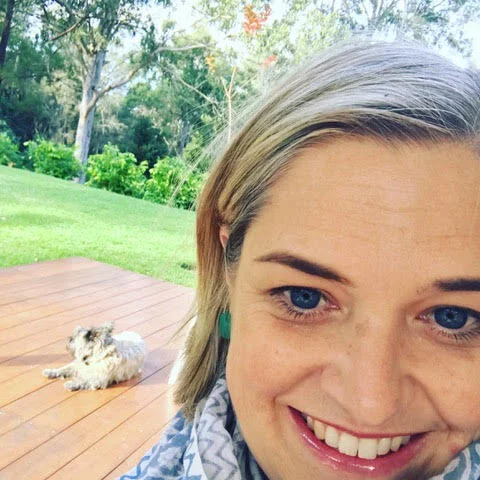
I chat with Clelia Douglas, a mother of three who worked overseas for 12 years. Upon returning home to Australia, Clelia and her husband decided to build a house in a rural suburb on family land next to her parents and sisters. Being surrounded by family with similar aged children created a wonderful community to raise her family.
Clelia shares some tips for people who have lost their village. She talks about things she has done abroad to create a community and the barriers she had to overcome to move back home.
Tune in to learn more on this and other valuable topics!
Listen now
About Clelia
Clelia was born and raised in Brisbane, and is part of a huge extended family. She and her husband have recently returned to Brisbane with their 3 children after living and working overseas for 12 years. Having birthed and raised a family overseas, Clelia sought out friendship and community that supported her in a way that her distant family was unable to.
Reach out to Clelia here: www.wildcanary.com.au
We explore the following questions:
What is "village building" in the context of modern parenthood, and why is it important?
How can new parents create their own support network or "village" in today's world?
What are some of the challenges that come with living close to family, and how can these be overcome?
How can parents balance the benefits of multi-generational living with the challenges of privacy and boundaries?
What are the key elements needed to foster a supportive community for raising children?
How can parents identify people who share similar values to build a supportive environment for their children?
What steps can parents take if they feel like they’ve lost their community or support network?
If you love this podcast please subscribe leave a 5-star rating and review wherever you listen!
Transcript
Julia Jones:
I invited you on this show because I want some examples of 21st village building, and I think you've done a pretty amazing job. So are you happy to introduce yourself and tell us a little bit about your story?
Clelia Douglas:
Sure. Clearly I'm a mother of three. I've got a 12-year-old, 10-year-old, and a 7-year-old. We currently live in Brisbane and are lucky enough to live in, I guess, what people like to call a commune kind of situation. I'm really lucky. I live next door to two of my sisters and also to my mom and dad. I'll talk a bit about that in a minute, but we've actually only been back in Brisbane for three years. Prior to that, we've been living overseas for the last 12 years. So I had all my babies overseas and without the support of family. And in those situations, I think we also worked pretty hard to find our people and to find the support networks that we needed. And sometimes that was through friendship groups, which kind of become your family when you're in an expat situation, but in some instances it was also through paid employment. So we had a nanny when I had my last two children.
Julia Jones:
Yeah, I love it. So you've obviously explored lots of different village building methods.
Clelia Douglas:
We have, and I think that's probably because I come from a pretty big family and I would like to say we're intergenerational. So I've got much older siblings and when they were having children, I was a teenager and now when I had children, their kids were teenagers and now their kids are having kids and my kids are getting to grow up with them. So I think I have always valued that aspect of having, I don't know, different generations. And I think it's really important for kids to be raised amongst a larger network of people.
Julia Jones:
Yeah, I couldn't agree more. And the example I always talk about is in Hunter Gather cultures that 18 different adults care for each child. It's a lot of adults and we don't have that anymore. Usually now we kind of have a lot of these ideas, these kind of preconceived notions that the mother is the only person, the biological mother is the only person able to do that job really well and that no one else is going to do a really good job of looking after children. But I feel, and I think the way that it's been for most of human history is that actually there's been a lot of adults involved in each child's upbringing and that those different perspectives, different generations that actually really, really valuable to their long-term development and also to the sanity and mental health of the mother as well.
Clelia Douglas:
Absolutely. I'm finding at the moment parenting my 12-year-old who is kind of coming into those pre-teen years, it's really challenging. And when I have lost my temper with him or I've lost my cool, or he doesn't agree with what it is that I'm saying to him, I know he will disappear next door to blow off steam. And whether it's to his aunt or to an older cousin who I know that they've all genuinely got my back as well, so that they'll be there as a sounding board for him, but also in a way that is still holding the line and being loving and compassionate towards him, but actually saying, you know what, mate? Maybe what you are saying right now is actually not appropriate. So I find in that respect, it gives me a better opportunity to I think guide my children, but also to do it in a way that if they walk away from the conversation, I'm not fearful that they're walking away from it altogether…
Julia Jones:
To nothing and no one.
Clelia Douglas:
To nothing and no one, and to sit in a room where they feel desperate or I think there are lots of different ways that can play out. And I just feel lucky enough that they've got the space here, so I don't feel nervous when they disappear for a couple of hours, usually somewhere on the two and a half acres and I can ring a bell and they'll come back at some stage. And I think that's a really important part of childhood as well for them having that safe space. We're lucky in addition to having family living here, we've also got sort of up the road three or four different families and we all interconnect and we've just built gates between the properties and the kids just disappear. And it's like the childhood that many of us experienced, but that parents are terrified to give their children these days because of the way society is. And I love that they've got that freedom to go and build teepees and make huts and play with the ducklings and all of that sort of thing. So I think it's really important.
Julia Jones:
So all these years later, you're obviously reaping the rewards of all of that village building effort that you've put in a long time ago, but are you happy to take us back to the beginning? Where were you when you had your first baby and what experience led you to realise this is so important?
Clelia Douglas:
Yeah, my first baby, I had my first baby in Hawaii and we were living there and I had found it really difficult to find my community in Hawaii. When we moved there, I obviously had no children and I found it very difficult to make friends. Most of the people who were there who were not working were retirees or there was also a big military presence there. So most of my friends actually ended up being in the military. And so we kind of, they're very good at doing networks and doing community support. So I was really lucky when I had my first child. My mom actually came and stayed with us for two months, and that was extraordinary because it gave me the space. She took care of all of the cooking and the cleaning and it gave me the space just to focus on being a mother, and I'm eternally grateful for her for doing that. And she did that actually with all three of my children, but it made the most difference to me with that first one, I think.
Julia Jones:
And where does she get that idea from? Because a lot of traditional cultures do this, but not nowadays, so how come she's still in touch with that knowledge and that idea?
Clelia Douglas:
She's a pretty wise woman. My mom's actually an only child, and so she went on to have six children of her own, but she was an only child and her mother was also an extraordinary woman. And I think it's been modelled for us. She family is the most important thing to her and supporting all of us. When I say we're six, we're five girls and one boy, and she has taught all of us how to be mothers and how to be strong women and leaders. And she does it by leading the way herself. And she's devoted her life to caring for all of us and caring for our children and creating that sense of family. She really values what family adds to a life and how rich your life can be. I love that when you have that.
Julia Jones:
Yeah, because you're talking on the one hand about strength, but on the other hand, you're talking about resting in bed for two months after having a baby, which for
Clelia Douglas:
A lot of people, but that's what strength is. Exactly.
Clelia Douglas:
She said to me, how are you? I think she also realised because when she had her first and second babies, her partner was not supportive in her breastfeeding and she really struggled and had a very stressful time, and her milk dried up, and I think a lot of people would refer to her as kind of a mother earth kind of person. And she just said to me, it's really important that you sleep. It's really important that you rest. This is your job at the moment is nourishing your baby. And if you are going to be able to do that, then somebody needs to be here to nourish and support you. So yeah, it's a really exceptional thing to have done. And I actually think in a lot of ways it was to my advantage that we were living overseas because if we'd been in Australia, she wouldn't have come and moved in for two months. She would've been there to support me, but she wouldn't have been there the way she was. And my younger sister was having kids around the same time and she didn't do the same thing for her. So in a lot of respects, it was actually a really fortuitous time for us to be away.
Julia Jones:
Yes, I love it. I love that perspective. And tell me what led you to decide to come home and how did you make that happen?
Clelia Douglas:
We came home. So after Hawaii, we then went and lived in Aruba and I had two more babies when we lived in Aruba. And whilst we were there, I had a full-time nanny, which was just extraordinary. It really gave me so much space to be a mother without having to worry about a lot of the tedious things. And I felt like it gave me a level of patience with my mothering that I wouldn't have had otherwise. So we were there for four years and then we were in London for four years and London was a bit trickier, but then we've come back to Brisbane. My husband was offered a job back here, and so we moved back here three years ago and all the time that we were away, I had said, oh, there's no way I would live next door to all of my family.
Clelia Douglas:
And as we were making the decision to come back, my husband just said to me, we've lived away for all of these years. And he said, I can see exactly what's going to happen if we don't live near your family. You will spend half your life in the car driving backwards and forwards to be near them and the kids. It's really important for the kids to have that time with their grandparents. My dad, since we've been home, has been diagnosed with vascular dementia. So it's actually also meant that he's been able to stay at home because we can all support mom. It's this intergenerational capacity to live and support each other. None of us should be doing it by ourselves.
Julia Jones:
Yeah, I love that. And I love especially that you mentioned that you would've thought, I would never live next door to my family, but here you are. Can you talk a little bit about, because a lot of people listening to this grow, well, that's nice for you, but I would never want to live with my family. So what are some of the barriers that you have to overcome to make that happen?
Clelia Douglas:
Well, I mean, to be fair, everyone's pretty respectful of each other's space. We kind of come and go, if I need a cup of something, I'll just walk into somebody else's house and grab it. It's sort of an unwritten rule that you can come and borrow anything as long as it gets returned. And I think our concern was that we would be living in each other's pockets, but if I'm brutally honest, we're all incredibly busy with our own lives anyway, and I actually don't really see that much of my family. It's funny, I'll see them as I'm driving in or out or I will see them. Like this morning, my mum and dad dropped in for a cup of coffee and my sister came in because she needed some advice on something else. So we will definitely, and probably twice a week I'll send a note round and say, I am cooking dinner.
Clelia Douglas:
Does anybody need dinner tonight? We've all got very different living situations, and we've all got kids at different ages. And so we're kind of all pretty supportive of each other in knowing what's going on in each other's lives. And I think it's also that proximity to each other that gives you that, I don't know, that detail and that ate of day-to-Day life that kind of happens around you, but you don't necessarily know about it when you're not living it. And so we're able to support each other in that way. I think my husband has found it pretty difficult. He is very close to my brothers-in-Law, and so they all get on pretty well together, and they all have a big joke, but sometimes I think the boundaries could be a little bit more stricter. He would be happier if we had a little bit more privacy. But having said that, it's not really that big of a deal, if you know what I mean. So I had been really concerned that we would just be living in each other's pockets, and actually we just don't because we're all too busy to be doing that.
Julia Jones:
And it sounds like a bit of weighing up the risks and benefits. Of course, you lose some of that privacy and you probably have to put up with a few of those, the typical family dynamics. But at the same time, the benefits are so great that perhaps it's worth just foregoing a few of those small comforts in order to have that community and that support that you get now.
Clelia Douglas:
Yeah, no, look, I absolutely would agree with that comment. There's always a give and take, and I think that's the reality. But we knew that what we wanted for ourselves and for our kids was to have accessibility to multi-generational living. And we get to do that without all living under the one roof, which I think has been really important for us to have our own space and yeah.
Julia Jones:
Yeah, I love it. And can you tell me about anything that you've tried that hasn't worked? Is there any things that you've done over the years that you're like, gosh, I wouldn't do that again?
Clelia Douglas:
Yeah, when we were living in Aruba, we had some really close friends who had a marriage breakdown, and we had kind of a granny flat attached to the house, and we had one of them living in the granny flat for a period of time, and that didn't work particularly well, but I think that that didn't work was the reason that didn't work was because we hadn't put the boundaries in place to start off with. I think it's really important that when you find people to be part of your community, that you have a similar moral compass and similar ethical values. And certainly from my perspective, I have found that it's worked when I have found people that are like that. So I'm happy for my kids to be playing with their kids, and I'm happy for those people to pull my kids up if they've observed them doing something.
Clelia Douglas:
Do you know what I mean? I feel very comfortable with that, but I don't think that that works when you're not on the same page parenting wise as those other people. And I guess I'm a bit of a free range parent. I let my kids, I feel like if my children want those opportunities to be able to walk to school by themselves or whatever it is, I feel that when they ask for those opportunities, it's because they feel like they're ready to do them and with the right boundaries in place that they should be given those opportunities. Now, a lot of parents would not necessarily agree with that, but I think finding those people that are on the same page as me has also been a really kind of lucky thing for me over time.
Julia Jones:
Well, lucky or maybe conscious. I was going to say there's kind of two things that it sounds like you might've consciously sought out people who have similar values, or is that just luck?
Clelia Douglas:
Yeah, I think consciously I have sought them out, but then I think about the people that live in the sort of three or four houses surrounding here, and I became friends with them, but they actually already lived there. So I actually do think that there is an element of luck in it. I really do. I've sought them out to be friends, and we've become incredibly close friends, but it was luck that they were living next door to us.
Julia Jones:
Yes. So some people might live in communities where they don't really have a lot in common with the people who are their neighbours, and then that obviously makes it more difficult. But once you've found those like-minded people, do you feel like you have to have quite open discussions about boundaries? Or do you feel like that just happens naturally because anyway?
Clelia Douglas:
No, I don't feel like I've consciously had those conversations about boundaries. I think it's kind of happened in an evolutionary process as we've become better friends, and we've certainly put boundaries in place for the kids in that if an adult asks to leave or an adult asks you not to do something, then that's what has to happen. Or if an adult says, the kids will just rock up and say, oh, who wants to have a game of tennis? And all one of the adults will say, actually, no, that doesn't suit us today to have everybody over here. And so the kids will just disappear and dissipate back to their own house. So I think in that respect, there have been boundaries, but I think between the adults, I mean, I think every now and again, we'll kind of converse and say, does that suit you?
Clelia Douglas:
Is this working for you? I think certainly in the beginning when the kids started to spend a lot of time together, I think there's that kind of element as a parent where you think, oh my God, my children have been gone for six hours and they're not in my care, but is that a problem for the other family? So we certainly had those conversations around, is this working for you? Does this suit you? And actually, to be fair, they felt the same way. So there are days when the kids will all be over here and days when the kids will all be over there. And I think it's just found its own happy balance, to be honest.
Julia Jones:
So it doesn't sound like you need to particularly have boundaries other than around the children, but more that you need to have these open conversations so that if someone has had enough, then they can just say, Hey, clearly come pick up your kids. We are done.
Clelia Douglas:
Yeah, yeah, yeah, absolutely. No, absolutely. And I think it's also about not taking advantage of the situation. I think in situations for me, where it has failed have been where I have felt like it's totally a one way street, and I've got somebody's child at my house constantly, and there have been times where I've felt that that child has needed a safe space to come to. And so I've been very happy to open my house in that respect. But there is also a very fine line where you are also trying to do something as a family, and there's a child constantly there and with you. So yeah, I think having that capacity to say, I'm really sorry, but this actually doesn't work for us. And I think that comes, comes as you get to know people better or as you become more comfortable with what your own boundaries are, and often you're making it up as you go along,
Julia Jones:
And it changes so frequently, doesn't it? As the children get older, then there's different things that you need to be discussed.
Clelia Douglas:
Yeah, definitely.
Julia Jones:
Oh, I love it. Do you have any other last tips that you'd like to share with people who are kind of feeling like they've lost their village and how they can reconnect with this themselves?
Clelia Douglas:
I think my thing every time we moved location, and I would have this awful sinking feeling when I was leaving people that I've developed relationships with and everything else, and I'd be moving to a new place. And it's always a challenge because you're always thinking, how am I going to find my people? And I think it's that capacity to work out really quickly whether or not you have a connection with someone. And sometimes that means being quite vulnerable yourself and quite open. And I think we're not prone to doing that. And I actually suspect that it's something that people who have lived as an expat do quite well. We all talk about the fact that you can walk into a room and have made a whole lot of new friends within 30 minutes because everybody's very good at putting their own heart and soul on the table.
Clelia Douglas:
And I think you've got to open yourself up to that, but I think you've also got to be really realistic when it doesn't work. And I think you've got to be happy to walk away and keep trying. And it doesn't always happen straight away, certainly it doesn't. It takes time. But I think that's the beauty also of social media these days, is that you can find community and you put it out there, and I think people genuinely are looking for it themselves as well. It's just that people are not necessarily sure how or where to find it. So yeah, that's what I would say is put yourself out there and don't be afraid to fail because you're not necessarily going to find people straight up.
Julia Jones:
Yes, I love it. I absolutely love it. Thank you so much. That's been a really helpful conversation, and I'm sure a lot of people will listen to it and think like, okay, I'm going to go out, I'm going to make some new friends, or I'm going to get connected with my family again. And it's so important that we have these villages. Do you have anything else to add, or do you feel like that kind of covers it?
Clelia Douglas:
No, I don't think so. I just think that we're all designed to do it as part of a bigger community. I think there's an immense amount of pressure put on mothers and fathers to have this perfect life, to work their tails off, to have children who are happy and respectful and to have it all. And I actually don't necessarily think that that's actually a realistic proposition for anybody. And it parenting is hard. It's really hard. And I think the more people that you can have around you, the better you're going to be in terms of yourself and that capacity to have the patience with yourself and learning as a parent, but also your children will be better off for it because they all have a point of view that has come not just from you, but from an extended group of people that they love and trust. And that is such a valuable thing for them to have in their lives, that they've got adults that they can turn to when their parents are not fulfilling that role for them.
Julia Jones:
I love it. Thank you so much, Clelia.
Clelia Douglas:
Pleasure.
