
The future of postpartum support
Interview with Julia Jones
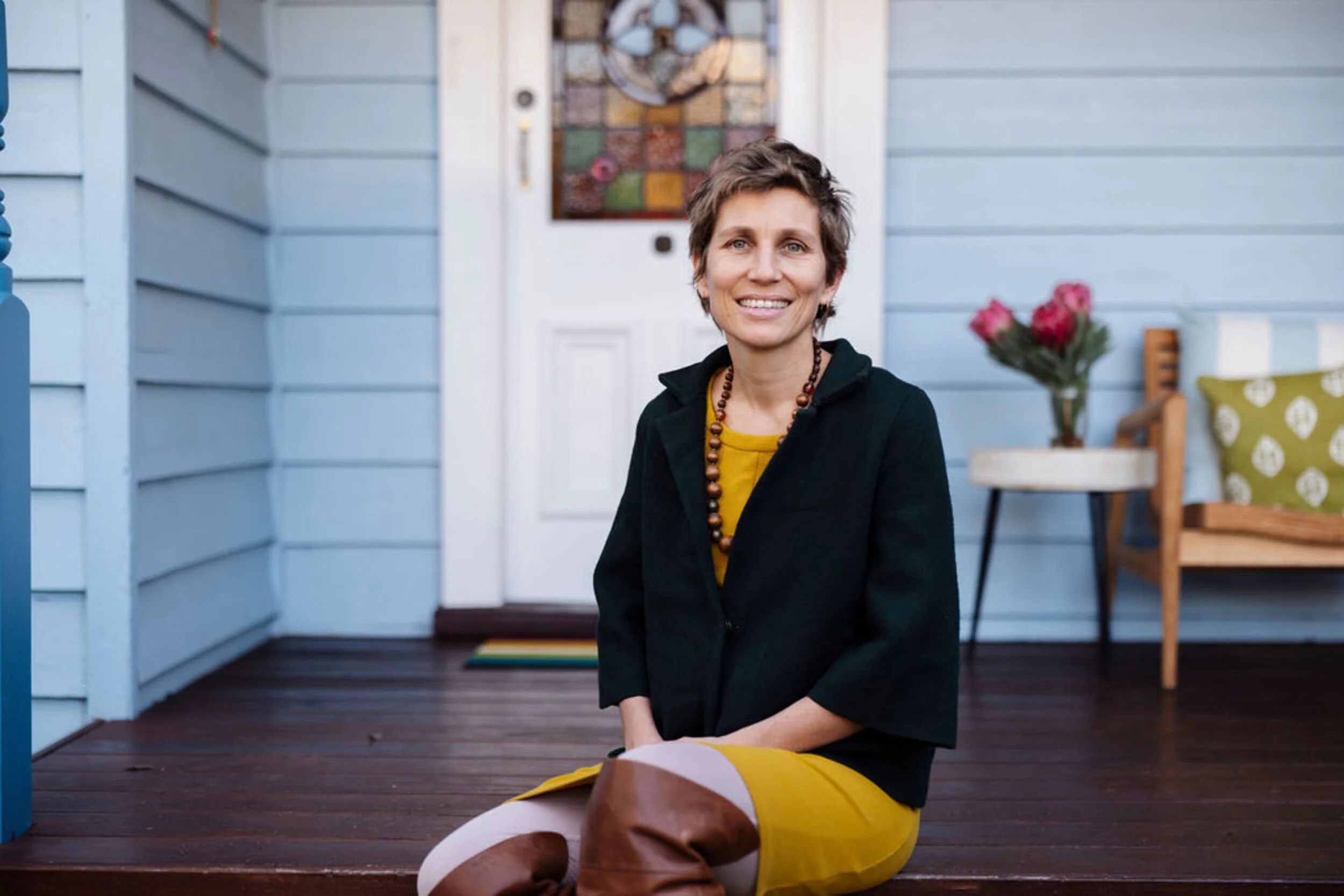
In this episode I announce a major milestone for Newborn Mothers: internationally recognised postpartum education and care certification, now valid in over 30 countries. Learn why professional recognition matters, how the new 100-hour certification works, and what this means for the future of postpartum care.
Listen Now
About Julia
Julia is the founding director and lead educator at Newborn Mothers, a global postpartum education business. She has worked in postpartum care for fifteen years, trained thousands of postpartum professionals worldwide and written a bestselling book called Newborn Mothers: When a Baby is Born, So is a Mother.
Reach out to Julia here: https://newbornmothers.com/
We explore the following questions:
Why is this such a big moment?
Why is it important to have postpartum education and care recognised as its own modality?
How many countries does the certification include?
How does the certification actually work and how big a commitment is it?
What would you say to someone who's wondering whether it's realistic to take on that commitment alongside paid work, unpaid work, family life, and everything else people are juggling?
How will this certification better prepare people for real-world postpartum work?
When are we beginning that first cohort?
For those who join this first cohort, what are you hoping they’ll say about the experience?
Is there anything else that you want to share about the certification?
For people listening who might not be familiar with Newborn Mothers, where would you like them to go to learn more or see whether this is right for them?
If you love this podcast please subscribe leave a 5-star rating and review wherever you listen!
Transcript
Antonia Anderson:
Hello and welcome to the Newborn Mothers podcast. I’m Antonia, one of the educators here at Newborn Mothers. And as a guest today, I have with me….Julia Jones! Hi, Julia.
Julia Jones:
Hello, hello. It's always so funny to be a guest on my own podcast. I've done this a few times, but I don't like doing podcasts solo. I don't know. I'd prefer to have someone to chat to. So whenever we want to share something, I usually get someone else to be the host. So thank you, Antonia.
Antonia Anderson:
Yeah, makes sense. And we have something really big to share today. Do you want to share why this is such a big moment for us?
Julia Jones:
We're recording this in January of 2026. And f you're new to Newborn Mothers, you might not know the backstory, but I've been teaching postpartum care for over 10 years now. And in the last few years, I've been making a lot of effort to professionalise the industry to have more recognised qualifications and take steps towards eventually having public funding for postpartum care work.
So we have achieved one of the really big steps on this journey: having our training recognised by the International Institute of Complementary Therapies. So that just came through in December on my very last day of work last year, even after Antonia and Ehdina and the rest of the team had gone on their holidays. So I had to sort of celebrate on my own and wait a long time before I could tell everyone.
So that's what this podcast is all about.
Antonia Anderson:
It's so exciting, and it's such a great way to kick off the new year. Julia, why is it so important, do you think, to have postpartum education and care recognised as its own modality?
Julia Jones:
It's an interesting question because there are some reasons why it really doesn't need to be. Globally, postpartum care has been shared as an oral tradition from woman to woman for, I would assume, as long as humans have been humans. We've always had postpartum care traditions, and hundreds of cultures have had carers who do this work.
So on the one hand, I don't think that we should invalidate that. That is a really important and, um, valuable contribution to postpartum care. On the other hand, it's also largely not a regulated industry around the world, meaning anyone could provide postpartum care without needing a formal qualification or certificate and that sort of thing. So again, there's good and bad things about that. And I think it's important to recognise traditional cultures, contributions and ways of learning and teaching as well.
Julia Jones:
So I don't think that that's a bad thing, but on the other hand, in this current modern world that we live in, it would be really great to have public funding for postpartum care. And in order to have public funding, we need to have some kind of system for recognising who is qualified, who's able to provide this kind of care.
So that's been a long-term goal of mine because right now, all of the thousands of people that I've taught postpartum care to, the tens of thousands of mothers that they've helped all over the world, would very likely have had to pay privately for their services. And this just means that the postpartum care is not available to everybody. So this has always been a real challenge for me with my background in human rights and social justice. This was always my goal, to make postpartum care available to everyone.
And we just can't do that without recognised qualifications. So that's what the goal of registering this new modality is and the steps that we're taking. I don't think everyone has to be a professional in this industry, and I don't think that we should stop people from learning in more traditional ways, but I'm really happy that there is now an option for you to have a more widely recognised certification.
Antonia Anderson:
It's wonderful to have that option. And with this certification, how big a global outreach are we talking? How many countries does this apply to? Who does this include?
Julia Jones:
Well, I have to say, Antonia, even I was really quite shocked and excited about this because this modality recognition is valid in over 30 countries! Which I didn't know until it came through, and I asked them to clarify, and I was actually really pleasantly surprised myself. But it is valid throughout the UK, Europe, Australia, New Zealand, Canada, unfortunately, not the United States yet, but we will look at certification pathways. I've got ... It still might be accepted in the US, but there are also other postpartum doula kind of certification pathways available too. So we'll definitely keep working on that. And I imagine we'll be able to make some announcements in the next year or two to include the US. But yes, having a certification that's recognised in over 30 countries is so exciting and really much, much bigger than I had expected.
Antonia Anderson:
Which is lovely because this has been something that you've been working on bringing to fruition for so many years. So it's lovely to have not just achieved that goal, but to actually have it be a bit bigger than you expected.
Julia Jones:
Yeah, absolutely. Having kind of waited and tried and waited and tried again. It's lovely to have that.
Antonia Anderson:
Should we dive a bit deeply into the certification itself? So how does it actually work for students; how big of a commitment is it, how long can they take to do it? Do you want to share a little bit about how it actually works for them?
Julia Jones:
So this is, again, optional. So we will continue to offer different levels of qualifications. So if people don't want to take on such a high certification that takes so many hours, you don't have to do this. But if you want something that's really going to give you a lot of confidence, that's going to allow you to get insurance and recognition in lots of different countries, then this is the option for you.
It will be a 100-hour certification process that includes a lot of different layers. And we've kind of really deliberately designed those layers so that they scaffold the learning and they build one after the other.
So the first layer is the training, which a lot of our students are already familiar with. So we've already had hundreds of students—and thousands, if we include our old versions of our course—do our training.
The training itself is online learning modules, and it takes about 32 hours to do everything, and that's literally just learning. That's just taking in the information about all of the different things, cultural care, breastfeeding support, mental health and sleep and all that kind of stuff.
And once people have completed that, they can choose to move into the integration stage, where they can really deepen their understanding through reflections, workbooks, and group calls, and start reaching out in their local area to build a personalised list of referrals.
So this is really about the chance to start integrating what you're learning and thinking about it in the context of your own local area, your own work, and the networks you might be practising in.
And this stage will take about 36 hours too. So those two stages are quite self-paced; there's not a lot of pressure. People can enrol and take their time with that first 68 hours.
And then once they've achieved those two stages, and demonstrated competence in those areas — so we can see that, yes, you're ready to go out into the world, we can see that you've trained, we can see that you've spent some time really deeply understanding and engaging with what you've learned — then they can move into stage three, which is applied practice. That's where they complete practical hours with real clients. So that's another 36 hours of postpartum care they'll need to provide to families. And that could be a range of things. They might do some in-home care, they might offer some educational classes, and they might run mothers' circles.
We would encourage people to try a few different ways of providing postpartum education and care during that 36 hours. Those hours will be supported by our team so that if challenges come up or they need to reflect on things or they have questions, they've got a chance to really be guided through that time. And that applied practice stage needs to be completed within 12 months.
So it is a big commitment, but you can take it in those steps. You don't have to do everything all at once.
Antonia Anderson:
What would you say to someone who's wondering whether it's realistic to take on that commitment alongside paid work, unpaid work, family life, and all the other things people are juggling these days?
Julia Jones:
That's a tough question because I know it is a really busy time. I feel like the world's just gone so much faster. Everything slowed down during COVID, and it seemed like everyone had more time.
But the thing is, recently, with the cost of living and economic pressures, I feel like people don't have as much time, and they also have a lot more extracurricular activities. Kids are back at sports and birthday parties, and people are working more hours for money just to pay the bills.
So I understand that people might not be ready to take that on. So if you know that for sure you want this certification, there's no harm in starting now and doing the training and doing the integration. Those two stages you can do in your own time.
And then, when you're ready to commit to the 12 months of applied practice working with real clients, that's the only bit with some time pressure. If you know for sure that you want this certification, then you could just go ahead and start and take it at your own pace.
Or if you're not quite sure yet, we are also going to consider offering a Postpartum Foundations Training as well, because once we start this certification training, we know there’ll be people who don't want to commit 100 hours to a certification. So we will also be announcing in a couple of months some other training options for people who don't want the full certification.
Antonia Anderson:
I love that it's designed so that people can start where they are and I'm kind of picturing the three phases. There's almost like three little steps that you can take one at a time. You don't have to sort of jump over this huge obstacle all at once. So I love that the support and scaffolding is built in there.
Julia Jones:
Yeah. And the trainings will build into each other too. So if someone's not sure yet, they might start with the Foundation Training, and then the work that they've done in the Foundation Training can then be the beginning of the Stage One training for the certification as well.
So we won't make you redo anything. It's all built in. And if there are any current students already listening and they're like, "Oh, I've already done the training and I've already done the completion quiz," that's great! You don't have to resit that. We can take that prior learning and you can move on to Stage Two.
Antonia Anderson:
How would you say this certification might better prepare people for postpartum work in terms of that real-world postpartum work; being safe, being ethical, providing a high standard of care?
Julia Jones:
That's probably the most exciting thing for me.
There are some hoops we have to jump through in order to be more recognised. In a way, having the certification just makes the industry generally look more professional. But to be honest, that's kind of boring and a means to an end.
I think what's more exciting about the certification is the idea that our students can ... I know a lot of our students do the training and then feel really nervous to take on their first clients. They don't necessarily feel really confident yet. And even though we do offer a lot of support, there's no nudge to get them out into the world, to start connecting with other professionals, to start working with clients. But having that as part of a certification process will mean they get that little push, like, “If you want to graduate, take this next step.”
Although we do currently support our students, this is a more formalised way for them to get feedback and support. So I think it will give people more confidence to take that step.
And we know from many years of teaching postpartum care that there are a lot of challenging situations. I've supported students through countless different scenarios, whether that's one of my students supporting a client through a stillbirth or one of my students supporting a client through domestic violence situations, maybe we've even had students who've had to make reports to child protection.
There are so many things that come up, and sometimes, although most people won't experience this with their first client, it can make them nervous to take that first client and go like, "I'm not sure if I'm ready yet."
But having this sort of structured approach and the more structured support, I think, will give more people confidence to get started.
Antonia Anderson:
Yes, I can see it unfolding that way. Do you want to talk a little bit about when we are beginning that first cohort?
Julia Jones:
So we're going to give everyone a few weeks to decide whether they want to be in this first cohort.
If you're a current student, you don't need to pay any extra, you just need to decide if you're ready to commit the time. We'll be sending you information about that if you're a current student.
If you are not yet enrolled, now is a good time to enrol if you know that you want this certification and you want to be part of that first class, because in a few weeks, on the 26th of February, we'll be closing enrolments.
The reason we're doing that is we want to make sure we know who that first cohort is, and it is exciting as well to be part of the world's first recognised postpartum education and care professional student group.
So if you know that you want to be part of it, enrol before the 26th, and then we'll be closing enrolments to make sure that once we know the numbers in that class, we can bring in enough educators and support.
And also because, to be honest, we haven't done this before as a training organisation. So, you know, there'll probably be a few little things to iron out and a few sort of questions and bit of paperwork and that sort of thing that we need to figure out. So we want to kind of take that first group through before we reopen enrolments and allow it to be generally open for everyone else.
So if that sounds exciting to you, make sure you enrol before the 26th of February, because I'm not sure how long it will take us to reopen.
I really can't commit to that yet because we'd like to make sure we fully support that first cohort, that everything's running smoothly, and that all of our educators are provided with the skills, support, and resources they need to support the students. When we're really confident about all of that, then we'll reopen enrolments for everyone.
Antonia Anderson:
Every time we run a live round, I always love meeting the new cohort and getting to know students' stories and matching names with faces and countries. And it's always a really special time, but this just feels extra special because there's never been a cohort like this before. I just can't wait to meet everyone. I'm wondering for those who do join this first cohort, what are you hoping they'll say about the experience, a year or two from now?
Julia Jones:
We always get really great feedback about our training. I do spend a lot of time checking reviews, and even what people write publicly, not just what they tell us, we get all good feedback. People do love our training. So I don't think that will change.
But what I really hope is different about this class is that they will feel like they've contributed to the postpartum renaissance, that they've been part of this global change towards recognising women's work.
And, you know, one of these major steps towards getting public funding, and although we still don't have public funding, I think a recognised qualification is definitely a really important step on that pathway.
So I hope this first group of students feels really excited to be part of that early-adopter group and that movement.
And they'll be able to hopefully look back in 10 or 20 years and say, "I was there for the beginning of that journey."
Antonia Anderson:
Oh, that's so exciting. Is there anything else before we wrap up, that you want to share about the certification?
Julia Jones:
No, I think just to reaffirm that if you're a current student and you want to commit, and you're ready to do that 100 hours this year, just reach out and we'll let you know how to get started.
If you're a new student, make sure that you enrol before the 26th. All of this needs to happen before the 26th of February.
But if you aren't sure yet if you're ready for this big commitment, it's okay for you to just pause and think about it. I don't want to rush anyone who's feeling stressed at the moment or got some big life stuff going on. If this isn't your time, there will be chances again. I'm really not a high-pressure salesperson.
If you feel a bit daunted by the idea of doing 100 hours of study right now, it's okay to just pause, and we'll have some more training options for you to get started with in maybe March or April.
Also we will reopen enrolments again at some point for everyone else to do the certification as well.
So yeah, don't feel pressured to do this, but if you do feel that tingle of excitement about being one of the world’s first to go through this certification process, this is the moment.
This is such an exciting time, really, in my career. This is a big milestone for me and for Newborn Mothers, but also for postpartum care all over the world.
Antonia Anderson:
I'm definitely feeling that tingle of excitement. I'm just so excited to see how this certification does shape the future of postpartum care.
So for people listening to the podcast that might not be familiar with Newborn Mothers, where would you like them to go to learn more, or to see whether this is right for them?
Julia Jones:
Yeah, so newbornmothers.com is the website. You can click on the training to see this certification option. We also welcome people to email us at support@newbornmothers.com if you've got questions. And we will be having a couple of Q&A calls in the next few weeks, too.
So if you want to come and have a chat with me, to figure out if this is the right step for you, please don't be shy. Reach out. We really love to hear from you. And also, we really like to help people make the right decision. I'm not going to pressure a busy mum to do a hundred-hour certification!
So if you're on the fence and you're not sure, I'm really happy to help you make the right decision for you.
Reach out, jump on a Q&A call, hop on the website, and you can read more information about it.
Antonia Anderson:
Fantastic. Thank you so much, Julia. It's been such a pleasure chatting about this.
Julia Jones:
Thank you, Antonia, it's been really exciting to share.
