
From speech pathologist to postpartum professional
Interview with Alison Heppell
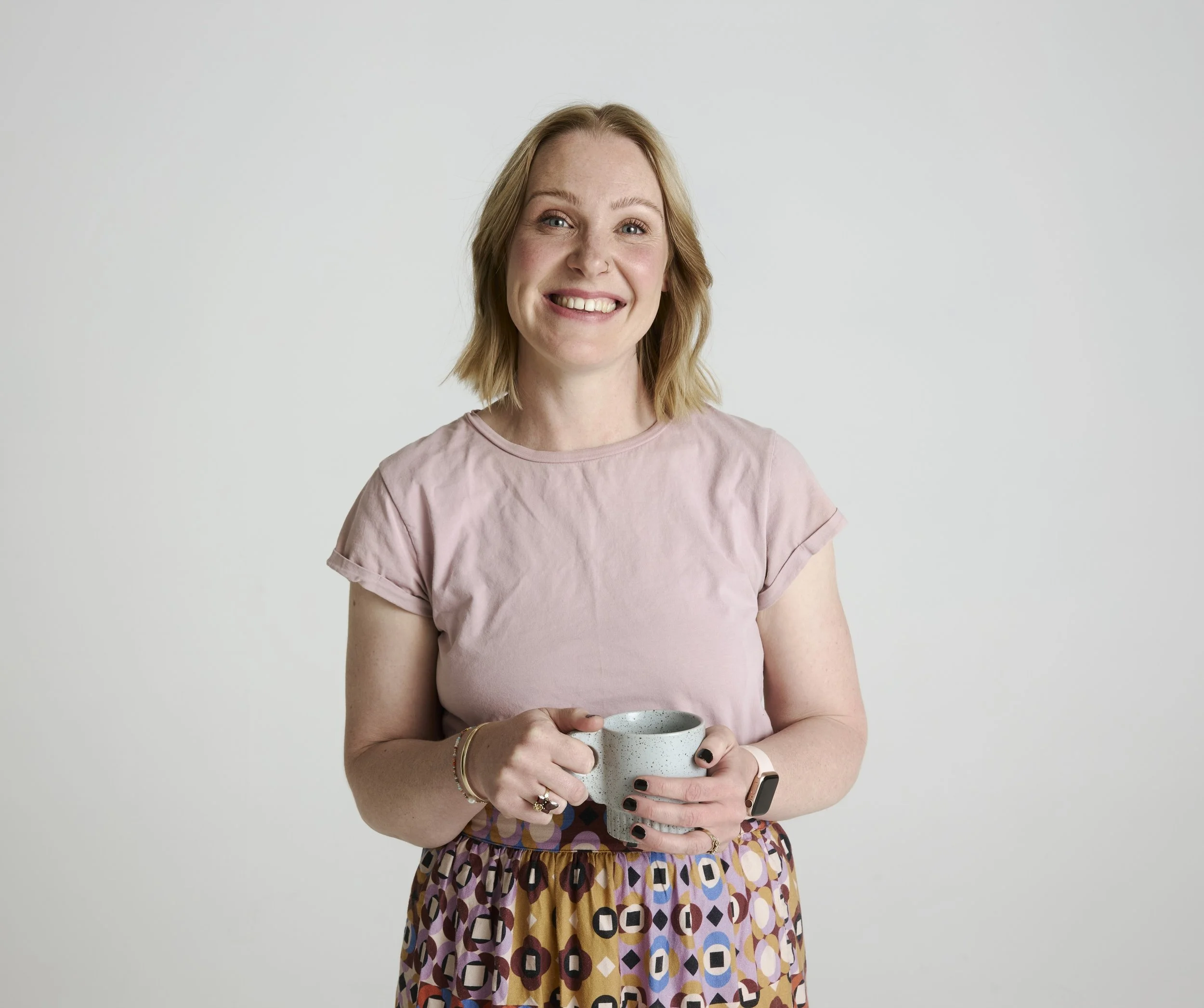
Julia Jones chats with Ali Heppell, a postpartum doula, matrescence educator and women's circle facilitator, based in the Dandenong Ranges of Melbourne. We discuss her journey from a career in speech pathology to becoming a postpartum practitioner. At the heart of our conversation is the importance of a sustainable business model.
Listen Now
About Alison
Ali is a postpartum doula, motherhood coach, and mother of two. With a background as a speech pathologist in the disability sector, she blends evidence-based knowledge with heart-centered, intuitive care. She supports mothers through in-home postpartum care, women’s circles, birth debriefing, and online education. Rooted in self-compassion and emotional and embodied awareness, Ali’s work nourishes mothers physically, emotionally, and spiritually. Her passion is ensuring mothers feel less alone and more connected—to themselves, their babies, and their village.
Reach out to Alison here: https://aliheppell.com/
We explore the following questions:
How did your background in Ayurveda and yoga influence your transition into postpartum care?
What inspired you to become a postpartum doula, and how did your personal journey shape this decision?
How can postpartum doulas use their unique skills and experiences to support families effectively?
Why is flexibility such an important aspect of being a postpartum doula, especially for mothers with young children?
How can doulas help mothers focus on emotional and practical needs rather than external expectations during the postpartum period?
Why is it important for postpartum doulas to adapt their care to each family’s unique needs?
How can doulas encourage mothers to prioritise support and connection over material items like prams or baby clothes?
What advice would you give to new doulas who are nervous about starting their practice or charging for their services?
How can doulas avoid burnout and maintain sustainable boundaries while supporting mothers?
Why is building a supportive network of doulas crucial for providing comprehensive postpartum care?
How does helping mothers “zoom out” and focus on long-term goals enhance their parenting journey?
What does the future of postpartum care look like, and how can doulas make their services more accessible?
If you love this podcast please subscribe leave a 5-star rating and review wherever you listen!
Transcript
Julia Jones:
Hello and welcome to another episode of the Newborn Mothers podcast, and I'm really always delighted to have a graduate back on the show. Ali, welcome. You did our course about four years ago in 2021. I always love just checking in with people a few years later and finding out what's been going on for you, what's happening, and so it's always a pleasure to have you here. Thanks for being here.
Alison Heppell:
Oh, thank you so much for having me. I'm really happy to have this conversation today.
Julia Jones:
So you are in the Dandenong Ranges in Victoria. And from memory, you have, your background is as a speech pathologist, is that right?
Alison Heppell:
Yeah, that's right.
Julia Jones:
So you'd always worked in caring work, and do you want to tell me a little bit about how you moved into postpartum care and where that interest came from?
Alison Heppell:
Yeah, yeah, completely. I guess the story really starts in 2019 when I was pregnant with my first son, Harry. And I was working full time. I was very much in the rush and the movement of being a speech pathologist and living in the inner city of Melbourne. And just kind of imagining that life. I think that, having heard mothers speak a lot now, I think I'm not alone in this, in that idea of just being like, oh, well I'll just pop the baby on the hip, and we keep going kind of vibe where it's just like, okay, he's just going to be a part of our lifestyle and that busy moving and just keep going and going and going, you know? And so yeah, it started there. I was planning a hospital birth, but I had hired a doula, so I feel like I was a little bit different than maybe the average in that I sought out something that I actually knew nothing about.
But my mum had passed away about six years before I was pregnant. And so, really wanted like a mother figure type person in my birthing space. And I'd also been a birth partner for my sister about two years prior to myself having my first baby. And so I really understood the role of a birth partner and what I wanted, my husband to be, but also what other people in that space to be. And so I planned a hospital birth, but got this doula, but I did not plan at all for postpartum, as is often the way. My husband and I were the last of our siblings to have kids. And so I'd actually seen like a lot of bubs and mums go through that time.
And my sisters both went through that. And I saw postpartum kind of like from the outside and I thought I knew it, but when I had my own lived experience, I was just like, what? Why is nobody telling us about this? I felt like it was this real behind-closed-doors kind of vibe, that even from my husband's siblings and my own sisters. So that was kind of like the catalyst, I guess, like all of this sort of background stuff around like, oh, what I was thinking, what I was moving through, what I was seeing around me.
And then I had Harry in August 2019 and entered a portal of change and experimentation and new ideas and new thoughts. And now I know that as matrescence, but at the time I was just like, oh, I'm just in this weird sort of portal of change, which I had felt before when mum died.
I had actually felt that portal of change happen in myself at that time. And so I kind of had felt it and knew it, but didn't have a name or anything for it. And so this portal opened up possibilities and experimentation and looking at different things and I just consumed everything I could possibly consume in the motherhood space and postpartum space. And just really trying to answer that, why is nobody talking about this question? Lots of Googling and lots of different things and my bookshelf completely transformed into all things postpartum and mothering, and as it does. I came across your work in Newborn Mothers, and Dr. Sophie Brock's work and also Amy Taylor-Kabbaz. And so there are these different kind of influences coming in and just listening to everything.
So that was like pretty much my first year postpartum. I got to August of the next year of 2020, so I'd been five months into COVID lockdowns. I was expected to go back to work as a speech pathologist. They didn't really want me back because they didn't know what was happening. In that time, we didn't know what work was supposed to be where. I think they had difficulty holding clients and doing Zoom calls and all of those crazy things that we were doing at that time. And I didn't really want to go back either because I was not feeling the excitement or motivation. I just was really loving where I was at, learning all of this stuff in postpartum, in motherhood, and that was bringing me lots of joy and light and inspiration rather than going back into speech.
So we mutually agreed that we'd push it back to the end of the year. And so I had four months to work it out, to decide what to do. I hired a career coach, and I said, okay, I need to know what I'm going to do, how I'm going to move to, like, what, what do I, what do I want to do? What do I want to do? That's where I got to the end of that. I was like, okay, I want to work with mothers, and booked myself in to do Newborn Mothers in 2021. Went back to work as well. And so I studied that in all of the little gaps as I could. And then enrolled in Dr. Sophie Brock's course and did that in the little gaps. And then by the end of 2021, I was a postpartum professional.
I was a motherhood I studies practitioner, I was a women's circle facilitator and I quit speech pathology. I was a mum to my 2-year-old then and pregnant with my second bub. I quit before I even was qualified for maternity leave. Because I was just like, get me out of here. I don't want to be here anymore. And, dived into all things homebirth and supported postpartum. And that was sort of my next journey. And so I went through it myself first. So I did all of that study, all of the learning, all of the information gathering, and then practised on myself before anything else.
Julia Jones:
I hear that story a lot, that it's our own sort of personal transformation in motherhood. Not always, but a lot of the time, that's the catalyst. And, once you know these things and like you're saying, you're like, why doesn't everyone talk about this? Like, why doesn't everyone know this? If someone had told me this a year ago, it would've changed my life. And so that really lights a fire for a lot of people to take that leap. I love that you hired a career coach. That's such a great idea because so many people want to change their careers when they have babies, but it's like a difficult time to sort of make those big changes in those big decisions. What were the kinds of fears you had? You'd obviously been a speech pathologist for a long time, you would've had a degree, so what were you worried about with kind of throwing that all out and saying, I'm doing something different?
Alison Heppell:
Oh, it was definitely everybody else's opinions. I think it was really interesting because, in both your course and in Sophie's course, I did lots of understanding of our culture and that type, but also like what shoulds are put upon us. And also I broke a little bit away from understanding my ability to please and be able to do the things that are expected of me. I was able to study hard and get the numbers to get into the course, and then I didn't quite get into that course. I would do this other course and I was just like, I could do it. And, who was I doing it for. When I learnt about that at the same time as I was changing my career, it was almost like, oh, it's okay. None of these are like my shoulds. There are other people’s shoulds. So I could see that my biggest fear was other people's worries or concerns or what they would say, but at the same time could also be like, but it's okay. It's my life. It's my choice, these are my values.
Julia Jones:
Yeah, it's such a strong cultural value for women who have some academic ability who are intelligent and get kind of good grades at school. And there's this sort of expectation that you're going to become one of those proper real jobs because we don't consider caring work. And even starting a business is in that same sort of category as a real job. And so a lot of people who have that sort of natural academic ability get sort of like funnelled into these pathways and then often in their thirties or forties they come back and go, wait, that wasn't actually just because I could get the grades, you know, that wasn't actually what I wanted to do. And why don't we consider the emotional intelligence and the innovation and the creativity? Why don't we consider those to be important? you know, skills to pursue as well. So I'm always really happy to hear from people like you who, even if it takes a little minute, but you've kind of like put that all aside and gone, no, no, this is right for me.
Alison Heppell:
And it's really interesting because it's culturally just sort of under the undercurrent of what's expected. But like I came from entrepreneurs, and I've got people all through my family who build their own businesses and do this. And so I had lots of examples. My husband has his own business as well. So it's interesting where it kind of shuffles and comes up and goes, oh, this is the should that I should be following. When really I had lots of examples of other people doing it, in a different way.
Julia Jones:
That is so interesting. So let's talk a little bit about that for a moment. What was it like, had you had a business before or was this the first business that you started?
Alison Heppell:
This was my first real business. Lots of entrepreneurs talk about having things that they did over time. I'm thinking like, you know, the people with the lemonade stand and that sort of thing. But, for me, I bought op shop clothes and resold them at markets as a little thing that I did throughout my uni time, which I absolutely loved. That became a bit of a business of sorts. I would do that and have all my clothes racks and I'd take them to different markets and festivals and stuff and set up little a little shop and sell my clothes.
Julia Jones:
So it wasn't such a leap for you to start a business?
Alison Heppell:
I don't think so. No. I think the biggest leap, maybe the other fear that I was thinking about with all that, the leap was the security in income. And because my husband has his own business that you know, then we are both like working it out all the time, you know? And so I think that's probably something we still work out and navigate, even now.
Julia Jones:
Yeah, it is tricky, isn't it? Especially again, because you know, it's just harder to get a mortgage and things when you have a small business. Even if you are earning more money, it's hard to sort of get people to take it seriously. So I can understand as a family that is like, you know, these are things everyone has to factor in.
Alison Heppell:
Yeah, yeah. And like we got our mortgage when I was a speech pathologist, so it was kind of like perfect timing in a way because it looks very different now.
Julia Jones:
Yes. And you still had that pay slip and you know, that's what the banks like to see.
Alison Heppell:
Yeah, exactly.
Julia Jones:
Even though, you know, it's quite possible for people to earn a lot more money as small business owners, but, it's sort of convincing everyone else of that, is hard.
Alison Heppell:
Exactly. And also I think for me being in this space, I felt every people who I would say I'm a speech pathologist, would kind of get it, whereas I feel like when I say I'm a postpartum doula, it is like this complicated mess of words that people don't really get or understand. There's that sort of element too, right? People don't know what you do.
Julia Jones:
Yeah. So let's talk about what you do because you offer a range of things. You do women's circles, mother blessings, you do in-home postpartum support. How did you decide what your offerings would be? And so how did you tell the world about that?
Alison Heppell:
That's a good question. I think, so I started with women's circles actually. so I actually did my postpartum doula course first, but then went on a second maternity leave and came back and I wanted to, because I had two kids and just working out how our family life would work, I just, I started with women's circles to begin with. and so that was the first thing that I really promoted and talked about. and what I wanted from that was community and connection with, and it was, I do mothers specific circles, so, and I really believe that we need spaces for mothers, that we are just talking from a mother centric kind of point of view. So I wanted, so I created those spaces first and created pregnancy circles and stuff so I could still interweave my knowledge as a doula.
I like those spaces because they women-led. They're not just me-led, they're kind of like everybody's, something that I was sort of, I moved away from when I, from being a speech pathologist to being a doula was really this idea that there's like one person who knows more. I really don't, I really deeply believe that that's not the case. And that's why I love women's circles and mother's circles because there is so much wisdom in the room and we can all be doing that together and creating that village feel and that community feel. And that's where it sort of really started, for me. Then when I had more capacity, I pulled in my postpartum work and then I had more capacity and I've pulled in birth debriefing and mother mentoring, and so they've sort of come in over time.
I think some part of that is tricky because I'm evolving, changing and people are watching that and I'm having to talk about how it all comes together. But like in recent times, I've really felt it's three things. Like it's deconditioning, so it's moving away from the cultural norms and really trying to pick what is ours and what is others. And then, repair work. So repairing village, repairing, co-regulation, repairing these things, rites of passages and that sort of thing. And then it's also revolution. So it's really different. It's life affirming and life changing and really moving towards a different way of being. So that is my foundation now, those three things. I really see how all of my offerings come into that, like even my personal.
Julia Jones:
And we do live in changing times. I mean, what, you know, what's happened in the last five years globally, it's like the whole world's a different place. So I think as long as you have those three pillars and then you're adapting to the needs of your community, but also your life stage as a mother, it's very normal for your capacity to ebb and flow. It's a really a common sort of fear when mums start their own business. But, one of my favourite sayings is it's not a tattoo. Think that was Seth Godin. because you can just try it, try a mother's circle, see if you like it, see if it works, see if people come, see if there's an impact. And then you can keep doing that and add something else, or you can stop doing that and try something else. So it's really common actually for businesses to grow and evolve the way that yours has. Probably when people are first starting out, they think they have to have everything organised and lined up and perfect before they hit publish on that website and it's just not the case.
Alison Heppell:
Yeah. And I didn't have a website for such a long time, and even when I finally decided to do postpartum doula work, which was only when my youngest son was one and a half, was when I got the contract done and got all those sort of like practical things done. You really don't have to have those for such a long time. It's kind of nice to be flexible in that. There was this time on social media where lots of people were talking about how like, I think the work, the term that they used were like baby do, or people who were like mothering at the same time that they were doulaing and how the juggle of that.
I guess that's something in the back of my mind. I want to be here. It doesn't have to be tattoo, but I am here for longevity. I am here for the long, and I really do feel like it's my life work. I want to be mothering sustainably while also working sustainably in this area. And so I love it. I want to just propel myself forward, but I have to be like you can do this. We can go slow, we can do both.
Julia Jones:
I think that's such a good message for everyone to hear. I started my business before I had babies, so, must be like 17, 18 years ago now. My, my oldest daughter's 15. And so for me, the amount that my business has changed and, and grown, and I've had three babies during that time, and my capacity comes and goes, and my husband's work situation changes and our financial needs change, you know, so, but absolutely that having that, what you were saying, your kind of three pillars of your work and staying really true to that. That idea of this is my life's work and there might be different ways that I'm doing it in this season and different ways that I'll do it in the next season, but ultimately it's all part of the same long-term journey.
Julia Jones:
So yeah, don't burn out. I always say it's the biggest reason that people's small businesses fail. And it's not because they can't make money or because, you know, their business model doesn't work. It's because what is happening is they're burning out, they're pushing too hard. And, you know, so I think these days I think people are getting that, I was reading the other day that 97% of small businesses want slow sustainable growth, and only 3% wanna, get investors and like, you know, grow massively and quickly and that kind of thing. So the vast majority of us, we are not out to be the next billionaire. We just want a work that's flexible, that's meaningful, that has a great impact on our lives and on the lives of our clients. So I love seeing you do that.
Alison Heppell:
Just to acknowledge the privilege in that too, right? I do have a husband who is also bringing an income into the family so that I can sustainably grow and I can also mother in the way that I want to mother. There's so much privilege behind this situation or this position that I'm in currently, and just really like acknowledging that.
Julia Jones:
Yeah, knowing that and appreciating it. You know, not everyone has that opportunity, but I have to say, when I started my business, my husband wasn't earning very much money. He was working, he was starting a charity, so he wasn't earning much at all. So for me, that little bit of pressure was quite good. It meant from the start I was like, this isn't a hobby. To pay the bills. And then there's been other times in my life when we've leaned in and out and he's earned more or less and I've been able to adjust as well. So we like taking turns to lean in. And that happens over time as well, because you are in that earlier season of mothering where you do need to receive more support and be able to do that. But who knows, give it another 10 or 15 years and it might be your name on the mortgage.
Alison Heppell:
Yeah, that's right. I'd love that.
Julia Jones:
So tell me what's next for your business. I know you're looking at some online support.
Alison Heppell:
I've made a course, I'm very excited about it. I very much work within my menstrual cycle and I think it was one bleed and I just like downloaded this whole course , and then when I got to my ovulation, I'm like, type it all up, and feeling really excited about it. It's called Mother Medicine, and it will be for mums in the new early years of motherhood. So in the first five years. and it will be sharing, like what the foundation is around community and connection, because that's really important. And the way that I've moved through my mothering journey so far has really been about community and connection
There will also be understanding those societal and cultural things that underpin how we live and coming back to our values. And then looking at, I do lots of somatic tools, so like body-based work, so sort of integrate, what we're moving through, especially around things like guilt and anger and grief. They're really big parts of what I work with, with mums. I haven't got an open date just yet, but it will be in the next month or so. So watch this space. I'm really excited for it.
Julia Jones:
That's really exciting. So people can find that on your website, aliheppell.com. We'll make sure we pop the link up in the show notes. Well, I'm curious too, why did you decide to go online when you've been such a local community-based business so far?
Alison Heppell:
Yeah, that's a good question. Online creates flexibility which is a big thing for me. I can go and pick up and drop off the kids and then come straight back onto the computer and just get going with the day. So that is helpful. I wanted to create opportunity to do more one-to-many, and seeing more people. And that's what I really love about circles, it's being able to do that, and reaching more people in that way. And, also acknowledging my energy as well. I think my energetic output is quite a lot when I sit in circle. And also when I do my postpartum doula work. I can really just do one doula session in a day, that's three hours. And I can do one circle that takes three or four hours to do in a day. And they're quite energetically output, lots of output. And, and just knowing my personality and what fits with me is to also have that balance between the online work so that I can sit here in my own space with a cup and a candle and and do a birth debrief or have a mentoring session and have that sort of balance between both, I think is really important for me.
Julia Jones:
I love it. It's really important in a business to have diverse income streams and different things that you enjoy. And particularly as your situation’s changing, you can kind of say, you know, this month I'm going to lean into doing more of that, that month I've got a bit less capacity for this. And, yeah, I think it's really wise.
Alison Heppell:
Yeah, no, it's been really good. This year I decided to do two closed circles. So they go for nine months of the year, every month we see the same group. And so that's pretty much structures my month in a way because I'm just like, well, I know two weekends a month I'm doing that, I'm seeing these same women and we're talking about different things and we are preparing for that. And it allows me to think of the themes of that month and then see how that comes together in what I share on my emails and my social media and then what comes out in mentoring sessions has been a nice way to structure this year.
Julia Jones:
I love that. I love that. Is there anything else you want to let people know about before we wrap up?
Alison Heppell:
I'm really happy to connect. I really love getting to know people and that has been one of the biggest things that I have got out of moving into this mother care space. The amount of women that I connect with, who are doing this important work as well. I have formed such a beautiful community of women. I can always ask the question of, and feel really connected and just like reciprocal, which feels really nice. and I'm always happy for another connection and another person to jump in and say hi.
Julia Jones:
So lovely to chat to you, Ali. Thank you so much for sharing your business journey and some of those learnings and insights you've had along the way.
Alison Heppell:
You're so welcome. Thank you for having me.
